Vodacom, MTN, Telkom and Three Others Want to Plan Rural Networks Together - Should Fibre Customers Worry?
The Association of Comms & Technology has asked the Competition Commission for a 5-year exemption letting Vodacom, MTN, Telkom, Cell C, Liquid and Rain jointly plan rural network infrastructure - a request gazetted 28 August 2026 and now drawing formal opposition from the Wireless Access Providers' Association. Here's exactly what's being asked, who's against it and why, and what it does and doesn't mean if you already have fibre.

In this article(12)
- 01What was actually filed, and when
- 02Who ACT's six members actually are - and who they aren't
- 03What exactly would - and wouldn't - be shared
- 04The case for it: duplication is what's actually keeping rural areas offline
- 05The case against it: coordination today can mean no competitor tomorrow
- 06How this played out over two weeks
- 07Why this matters if you already have fibre
- 08What we verified today, and what we couldn't
- 09Does this change anything for your fibre right now?
- 10What to watch next
- 11Bottom line
- 12Frequently asked questions
What was actually filed, and when
On 28 August 2026, an application from the Association of Comms & Technology (ACT) - the industry body representing several of South Africa's largest telecommunications operators - was published in Government Gazette 55257, opening a formal review process at the Competition Commission. TechCentral, which reviewed the gazette notice directly, reported that ACT is seeking a five-year exemption from parts of the Competition Act, relying on Section 10 - the provision that lets the Commission exempt an agreement between competitors where it serves a recognised public-interest goal, in this case "effective entry into, participation in and expansion within a market by small and medium businesses" in areas the industry considers too commercially thin to duplicate.
The six operators reported to be behind the application - Vodacom, MTN, Telkom, Cell C, Liquid Intelligent Technologies and Rain - are named in Sunday Times/TimesLive's 5 September 2026 report, which also carries a direct quote from ACT CEO Nomvuyiso Batyi: "The problem is that many of the biggest efficiencies in rural deployment need to be realised before capital is committed." We have not found ACT's own newsroom statement or the underlying gazette text hosted anywhere we could fetch directly today - the detail in this article is drawn from TechCentral's, Sunday Times/TimesLive's and IT-Online's independent reporting, cross-checked against each other, per the sourcing note at the end of this article.
| Metric | Value | Detail |
|---|---|---|
| Exemption sought | 5 years | Under Section 10 of the Competition Act |
| Operators named | 6 | Vodacom, MTN, Telkom, Cell C, Liquid, Rain - via the Association of Comms & Technology (ACT) |
| Filed via | Gazette 55257 | Published 28 August 2026, per TechCentral's review of the notice |
| Coverage backlog cited by opponents | 4,377 of 21,878 | Government facilities under spectrum licence obligations connected by October 2025, per WAPA's Paul Colmer |
Who ACT's six members actually are - and who they aren't
ACT is not itself a network operator - it's an industry association, the same body behind the wayleave-reform push this site covered in July. What matters for a fibre reader is which six companies are reported as being behind this specific application, and, just as importantly, which familiar fibre brands are not on that list. Only one of the six directly owns a major wholesale FTTH network that home fibre customers actually buy from.
| Operator | Type | Fibre-relevant footprint |
|---|---|---|
| Vodacom | Mobile network operator | Holds a 30% stake in Maziv - the holding company behind Vumatel - bought for R6.1bn cash plus fibre/transmission assets, per this site's own reporting on the Herotel deal. The only one of the six with a direct minority stake in a major home-FTTH network. |
| MTN | Mobile network operator | Sells fixed-wireless and 5G home broadband; no owned last-mile fibre network of its own. |
| Telkom | Mobile + fixed operator | Owns Openserve, South Africa's largest wholesale FTTH network by footprint - the infrastructure underneath a large share of every ISP's fibre packages, this site's own included. |
| Cell C | Mobile network operator | Historically the smallest of the four traditional mobile operators; no owned fixed fibre network. |
| Liquid Intelligent Technologies | Backbone / wholesale operator | Open-access terrestrial and subsea capacity plus pan-African data centres (see this site's WIOCC comparison); not a retail home-fibre brand. |
| Rain | Mobile network operator | Mobile-first; sells 5G/LTE home wireless broadband, not FTTH. |
None of Vumatel, Frogfoot, Octotel, MetroFibre or Herotel - the five other names that dominate this site's own deal catalogue alongside Openserve - appear as named applicants in any of the reporting reviewed for this article. That doesn't rule out that some of them are ACT members in a general sense, or that a future phase could widen who's covered; it just means that, on the evidence available today, this is primarily a mobile-operator and backbone-wholesaler initiative, with Telkom's Openserve as the one significant last-mile FTTH exception and Vodacom's Maziv stake as an indirect second link.
The case for it: duplication is what's actually keeping rural areas offline
ACT's central argument, as reported by TechCentral, is that the biggest costs in rural deployment - trenching, permitting, power, backhaul - are largely fixed regardless of how many networks eventually get built on top of them, and that committing that capital twice in a town that can only commercially support one network is what keeps rural areas unconnected rather than what protects competition there. TechCentral's reporting frames ACT's own position this way: "the realistic alternatives are not several independent networks or one shared network. They are shared infrastructure capable of carrying competing services, deployment that arrives years late, or deployment that never becomes commercially viable at all."
Read generously, that's a real trade-off rather than a purely self-serving one - it's the same logic that justifies open-access wholesale fibre in city centres, just applied to the planning stage in places where even wholesale open access hasn't been commercially attractive enough to reach yet. ACT's application, per the reporting reviewed here, is explicit that it wants retail competition preserved on top of any shared infrastructure - operators would still compete on price, service and product even where they'd jointly planned where the underlying network gets built.
The case against it: coordination today can mean no competitor tomorrow
WAPA executive member Paul Colmer's 10 September op-ed, published via IT-Online, makes a structural objection rather than a procedural one: "Competition guarantees affordability as well as availability," he writes, and once the six largest operators have jointly worked out where and when a rural site gets built, "who is going to duplicate that investment?" His point is that formal retail competition surviving on paper doesn't mean much if only one of the six ever actually builds in a given town - the other five, having already agreed it's covered, have no commercial reason to compete there even though nothing legally stops them.
Colmer backs that concern with a specific, checkable track-record number: of 21,878 government facilities identified under operators' existing spectrum-licensing coverage obligations, only 4,377 had been connected by October 2025 - roughly one in five. His argument is that the same six operators asking for more coordination room have not yet delivered on obligations they already committed to, and that "coverage without affordability is not inclusion" - a formal connection existing on a map doesn't help a household that still can't afford the service once it arrives. Colmer's recommendation is that the Commission either refuse the exemption as filed or attach binding conditions: guaranteed wholesale access for smaller ISPs and wireless operators, and measurable rollout targets rather than a coordination mechanism alone.
Wapa's objection lands in the same territory this site covered when Icasa gazetted its own formal affordability inquiry in early September - a notice it withdrew on 30 September 2026, on administrative and procedural grounds, with no republication date announced. Both processes are, at bottom, about whether South Africa's broadband market structure is actually delivering coverage and affordable pricing to the households furthest from a fibre trunk today, or just to the ones close enough to already be commercially attractive.
How this played out over two weeks
- 28 August 2026Application gazetted
ACT's exemption request is published in Government Gazette 55257, opening formal review by the Competition Commission.
- 3 September 2026First critical coverage
TechCentral publishes an opinion piece questioning the exemption's rural-competition implications, citing the gazette directly.
- 4 September 2026ACT sets out its case
A follow-up TechCentral piece lays out ACT's Section 10 argument and the 'realistic alternatives' framing for marginal areas.
- 5 September 2026Operators named publicly
Sunday Times/TimesLive reports the six ACT members by name and quotes ACT CEO Nomvuyiso Batyi on the rationale.
- 10 September 2026WAPA responds
Wireless Access Providers' Association executive member Paul Colmer publishes an opposing op-ed citing the government-facility connection backlog.
| Date | Milestone | What happened |
|---|---|---|
| 28 August 2026 | Application gazetted | ACT's exemption request is published in Government Gazette 55257, opening formal review by the Competition Commission. |
| 3 September 2026 | First critical coverage | TechCentral publishes an opinion piece questioning the exemption's rural-competition implications, citing the gazette directly. |
| 4 September 2026 | ACT sets out its case | A follow-up TechCentral piece lays out ACT's Section 10 argument and the 'realistic alternatives' framing for marginal areas. |
| 5 September 2026 | Operators named publicly | Sunday Times/TimesLive reports the six ACT members by name and quotes ACT CEO Nomvuyiso Batyi on the rationale. |
| 10 September 2026 | WAPA responds | Wireless Access Providers' Association executive member Paul Colmer publishes an opposing op-ed citing the government-facility connection backlog. |
Why this matters if you already have fibre
If you're reading this on an existing Openserve, Vumatel, Frogfoot, Octotel or MetroFibre line in a metro or established suburb, the honest answer is: this exemption, as scoped in the reporting reviewed here, isn't aimed at your area or your provider's competitive behaviour there. ACT's stated scope is explicitly limited to areas the six operators themselves consider commercially marginal to duplicate - normal retail competition, and the usual comparison shopping this site exists to support, is not what this application proposes to change.
Where it matters is for households and small businesses in the areas South Africa's fibre rollout hasn't reached yet, and for the smaller wireless ISPs and independent infrastructure providers WAPA represents. If the Commission approves the exemption broadly, the optimistic case is that towns get connected years sooner than they would under duplicated, individually-marginal business cases. The pessimistic case, per Colmer's argument, is that six large operators quietly agreeing who builds where produces the coverage map without the competitive pressure that's kept urban fibre prices falling - as this site's own reporting on the state of SA fibre shows, headline 100 Mbps fibre prices have fallen roughly 80-86% from their 2017 highs, a trend driven substantially by competing FNOs undercutting each other in areas where duplication was commercially viable.
It's also worth reading alongside two other stories this site has covered this quarter: WIOCC's $300 million capital raise and the broader trend of consolidated capital moving into backbone and wholesale infrastructure, and ACT's earlier push for a 30-working-day wayleave deadline at Icasa. Taken together, the pattern is an industry consistently arguing that regulatory and municipal friction, not a lack of capital or willingness to build, is the real constraint on rural and underserved coverage - a case regulators are now being asked to test on two fronts at once.
What we verified today, and what we couldn't
We fetched TechCentral's two direct reports on this application (published 3 and 4 September 2026), Sunday Times/TimesLive's 5 September report and IT-Online's 10 September op-ed directly today, rather than relying on search summaries alone. All four agree on the core shape of the application - a five-year Section 10 exemption, filed via Government Gazette 55257, aimed at rural infrastructure planning coordination - which clears this site's two-independent-source bar for facts not sourced first-party.
Two things we could not verify directly today, and are flagging rather than presenting as confirmed: we did not find or fetch ACT's own newsroom statement, if one exists, nor the primary gazette text itself, so every operator name, quote and scope detail in this article is attributed to the outlets that reported it rather than to ACT or the Competition Commission directly. We also could not confirm an exact public-comment deadline or an expected decision date from any source we fetched directly - if either is confirmed by a later report, we'll update this article. Mybroadband.co.za, which also covered this story, returned a 403 to our automated fetch today - a known, previously documented access limitation for this site's news checks - so its reporting is not part of the sourcing above.
Does this change anything for your fibre right now?
Should you do anything differently because of this application?
For the overwhelming majority of existing fibre customers, no. Work through it below.
- Q1
Do you already have fibre from Openserve, Vumatel, Frogfoot, Octotel or MetroFibre in a metro or established suburb?
- Yes → This application, as scoped in the reporting reviewed here, targets areas the six operators themselves consider too marginal to duplicate - not established metro competition. Nothing about your current contract, price or provider choice changes today.
- Q2
Are you waiting for fibre to reach a rural or currently-underserved area?
- Yes → This is the group the application is actually about. If approved, coordinated planning could bring a network sooner - but the same coordination is what WAPA argues could leave you with only one realistic provider once it arrives, rather than the competitive choice this site is built to help you compare.
- Q3
Do you run or rely on a smaller wireless ISP or independent infrastructure provider in an underserved area?
- Yes → You're the constituency WAPA says is excluded from the planning circle. The public interest is in how the Competition Commission ultimately scopes any approval - watch for wholesale-access conditions specifically.
What to watch next
Three concrete things would move this story forward: a confirmed public-comment deadline and process from the Competition Commission itself, since no source we fetched today states one with certainty; a republished notice for Icasa's own affordability inquiry, withdrawn on 30 September 2026 with no new date given; and - most importantly for fibre customers specifically - whether the Commission's eventual ruling, if the exemption is granted, attaches wholesale-access conditions of the kind Colmer is asking for, or approves the coordination mechanism without them. We'll update this article, or publish a follow-up, once the Commission responds.
Bottom line
Six of South Africa's largest telecoms operators - Vodacom, MTN, Telkom, Cell C, Liquid Intelligent Technologies and Rain - have asked the Competition Commission, via an application gazetted on 28 August 2026, for a five-year exemption to jointly plan (though not jointly price or market) infrastructure in rural areas they consider too commercially marginal to duplicate. Only Telkom, through Openserve, is a major retail FTTH network in the ordinary sense; Vodacom holds an indirect minority stake in Vumatel's parent Maziv.
Supporters, including ACT itself, argue duplication is what's actually keeping rural areas offline. Opponents, led by WAPA's Paul Colmer, argue coordinated planning among six large operators can quietly produce a one-provider-per-town outcome without the obligations that would normally come with a monopoly - and point to a real, checkable shortfall in existing coverage commitments as evidence the same operators haven't delivered on what they've already promised. For an existing metro fibre customer, none of this changes anything about your bill or your provider choice today. For anyone still waiting for a first fibre connection, it's a genuinely live regulatory decision worth watching.
Frequently asked questions
Help someone else pick the right fibre
Now go and compare the deals
Prices below come from our own deal tracking, checked on 19 October 2026.
Ranked by price across every ISP and network we track.
See the dealsThe full catalogue in one sortable table - filter by speed, price or network.
See the dealsHow the major ISPs rank on price, support and real measured performance.
See the dealsRelated insights
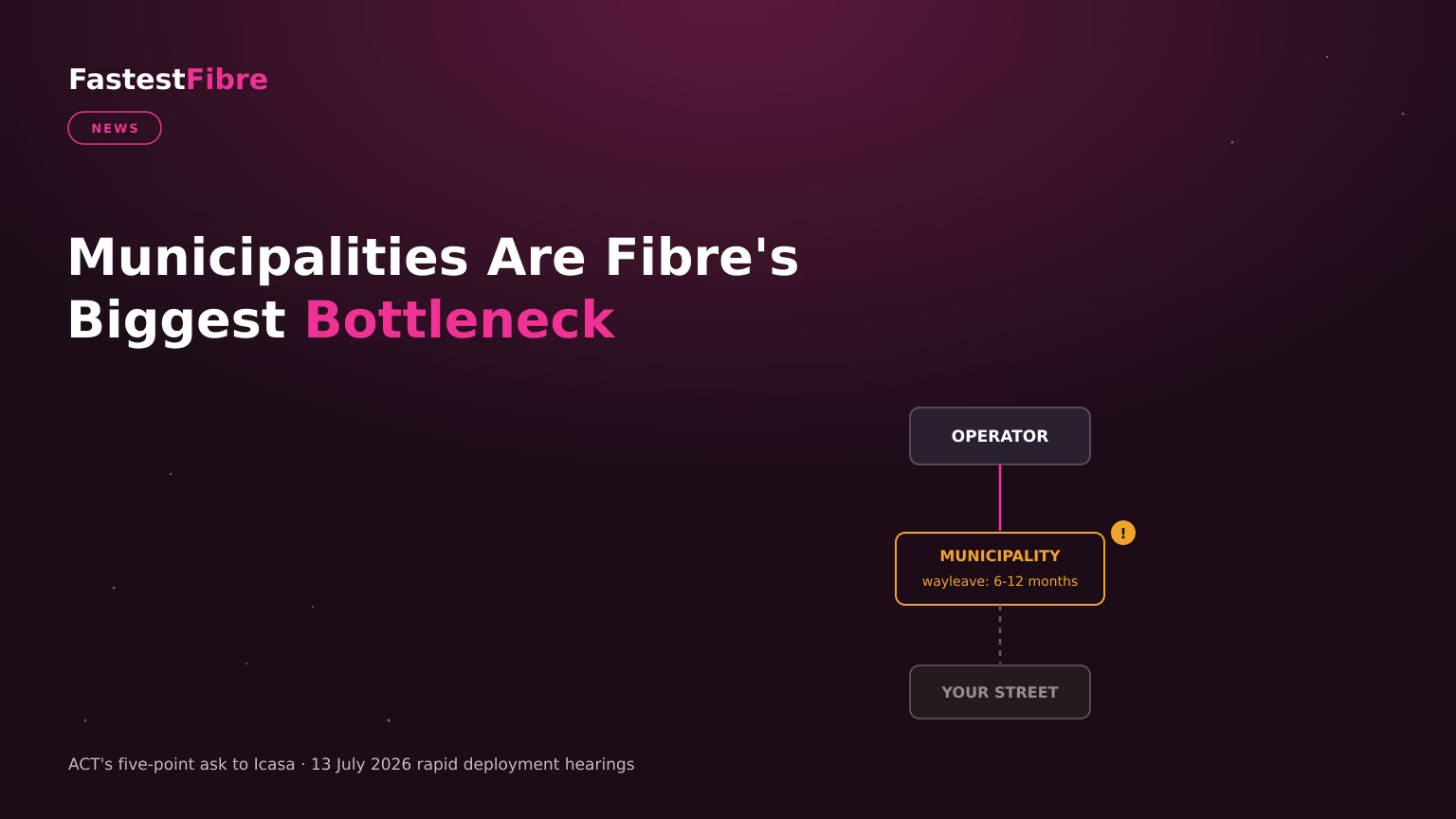
Six to 12 Months, Thousands of Rand: Why Municipalities Are Fibre's Biggest Bottleneck
Read article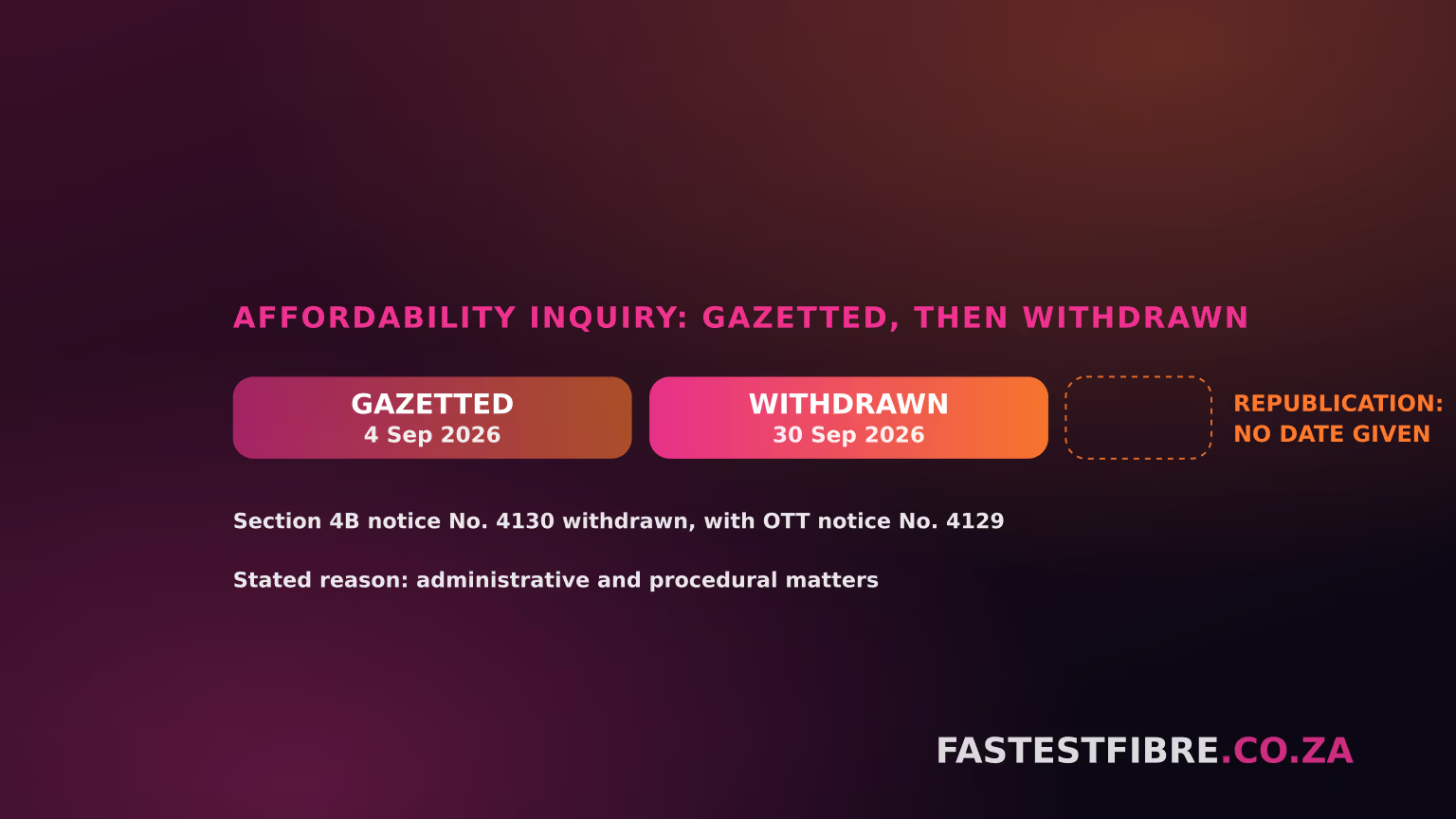
Icasa Withdrew Its Telecoms Affordability Inquiry Before It Began
Read article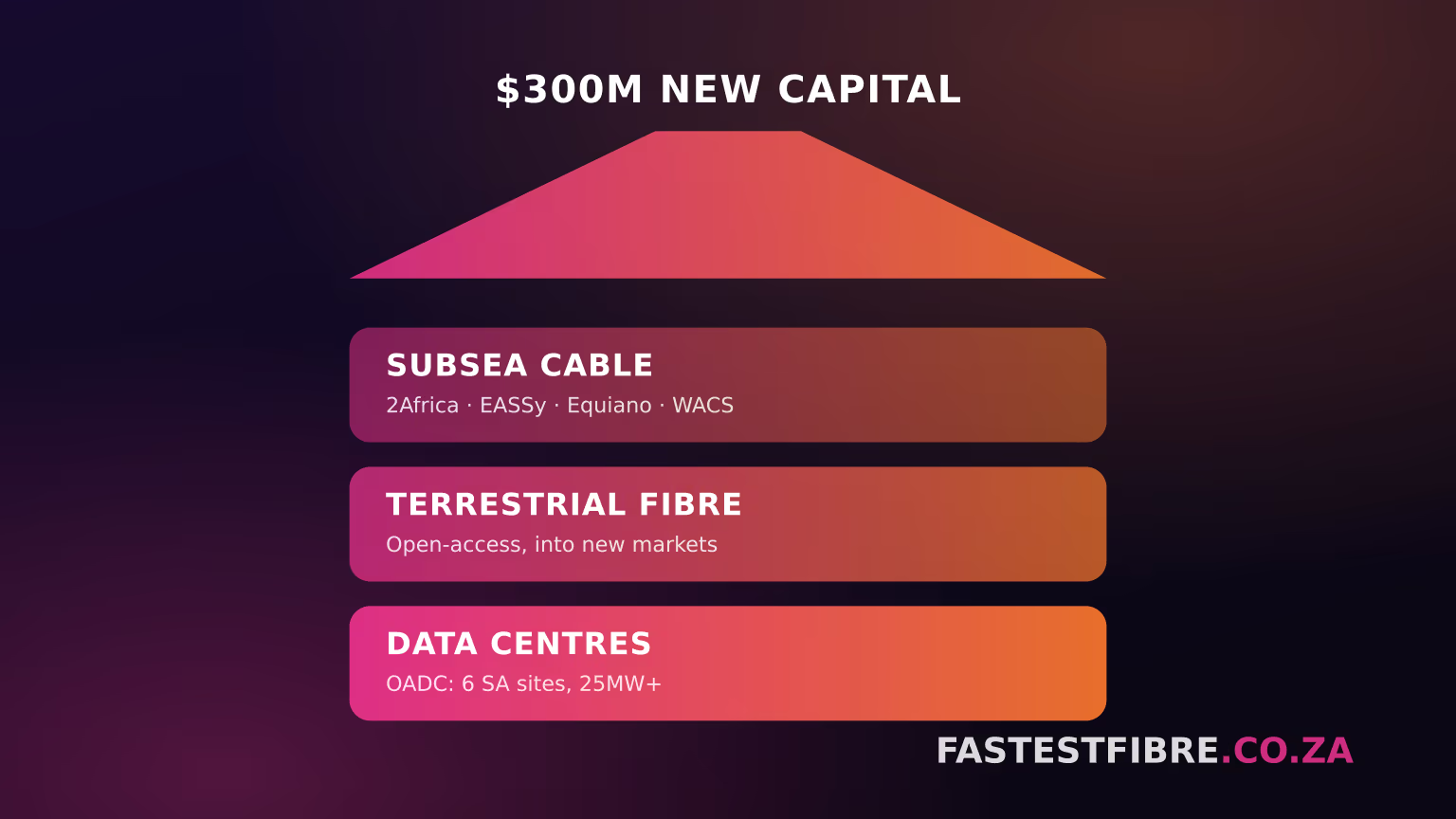
WIOCC's $300 Million Raise: What a Bigger Backbone Wholesaler Means for SA Fibre
Read article
Why Vodacom Just Cut Its Dividend to Fund Its Fibre Push
Read articleFibre Coverage Map: Check What's Available at Your Address
Read article
The State of Fibre Internet in South Africa 2026
Read article
One 43-Year-Old Ship in Cape Town Guards All of Africa's Internet
Read article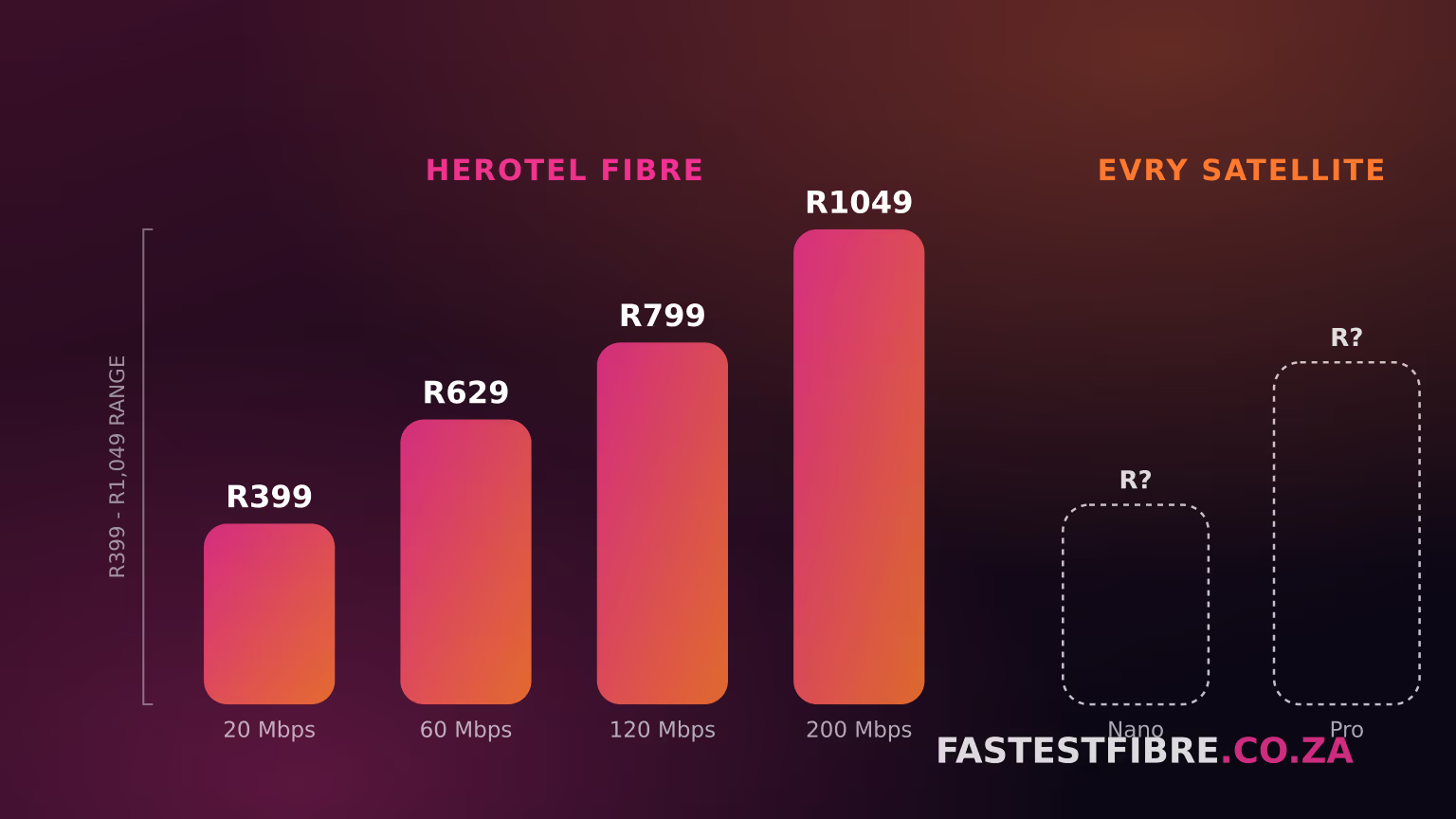
Herotel Just Told Us How Much Amazon's Satellite Internet Will Cost
Read article