Amazon Just Solved the Problem That Kept Starlink Out of South Africa
Herotel - owned by Maziv, the same group behind Vumatel - has struck a distribution deal with Amazon's satellite network to launch evry, sidestepping the Icasa ownership rule that's kept Starlink locked out for years. Here's how the deal works, why SA's biggest fibre operator is the one doing it, and what it means if you're still waiting for fibre.
In this article(10)
- 01Fibre's biggest rival this year isn't another fibre company
- 02What Amazon Leo actually is
- 03The deal: Herotel becomes Amazon's South African front door
- 04Why this needed a workaround at all: Icasa's ownership rule
- 05The contrast with Starlink couldn't be starker
- 06Why it's Maziv doing this, not some no-name outfit
- 07What this means if you're comparing fibre and satellite
- 08What happens next
- 09The practical takeaway if you're still waiting for fibre
- 10Frequently asked questions
Fibre's biggest rival this year isn't another fibre company
Two of the biggest South African fibre stories of the past week have been about who controls the cable that's already in the ground - Openserve launching its own retail ISP, and municipal wayleave delays throttling how fast new cable gets laid at all. A third story, which broke on 15 July 2026, is about something different: a technology that doesn't need cable, a permit, or a trench, arriving in South Africa through the front door of the country's biggest fibre group.
Herotel - a fixed-wireless and fibre internet service provider owned by Maziv, the merged Vumatel and Dark Fibre Africa entity that is comfortably South Africa's largest fibre network operator - has signed a distribution agreement with Amazon's low-Earth-orbit satellite broadband service, Amazon Leo. The new consumer brand is called evry, commercial launch is pencilled in for 2027, and registration is already open at evry.co.za.
What makes this worth a fibre reader's attention isn't the satellite hardware itself - it's who's behind the deal, and what regulatory trick made it possible. Starlink has spent more than six years trying and failing to get a South African licence. Amazon just found a way to skip that fight entirely, using a company that already knows how to run a South African ISP - and that company happens to be owned by the same group that owns Vumatel.
What Amazon Leo actually is
Amazon Leo is the rebranded successor to what was known internally as Project Kuiper - Amazon's own low-Earth-orbit (LEO) satellite broadband constellation, built to compete directly with SpaceX's Starlink. Satellites in the network orbit at roughly 590km altitude and communicate on Ka-band frequencies, the same general approach Starlink uses to deliver meaningfully lower latency than older geostationary satellite internet services, which orbit at around 35,000km and have always struggled with lag noticeable enough to make video calls and online gaming painful.
Amazon has committed to investing more than US$10 billion in the Leo constellation globally - a scale of capital that puts it in a genuinely small club of companies capable of building and operating a satellite internet network at all. South Africa is Amazon Leo's first announced distribution agreement anywhere in Africa, which says as much about how Amazon sees the local connectivity gap as it does about the deal itself.
The deal: Herotel becomes Amazon's South African front door
Under the agreement, Herotel becomes the authorised distributor of Amazon Leo's residential and small-business service in South Africa, trading under the new brand evry. Herotel is a genuinely large existing operator in its own right - it currently serves more than 350,000 active customers across 550-plus towns, through a mix of fibre and fixed-wireless infrastructure, backed by 120 local offices nationwide. That footprint matters here: evry doesn't need to build local installation, customer service and field-support capability from scratch, because Herotel already has it running in exactly the smaller towns and rural areas Amazon Leo is targeting.
On performance, evry is pitched at up to 300Mbit/s on Amazon's Nano and Pro antennas, with the Pro antenna reaching up to 400Mbit/s, and latency of around 50 milliseconds or less - low enough for video calls and most competitive online gaming, a meaningful step up from legacy satellite services. Commercial launch is targeted for 2027, and pricing hasn't been announced yet, though Amazon has publicly framed affordability as a priority for the service.
The announcement itself carried real institutional weight: Maziv CEO Dietlof Mare, Communications Minister Solly Malatsi and Amazon executive David Zapolsky all appeared alongside it. Trevor Vieweg, who heads Amazon Leo's global business, put the licensing arrangement plainly: "Herotel will be holding the licences in this agreement." Herotel CEO Van Zyl Botha's comment on market fit was more understated: "We wouldn't be sitting here if we didn't think the product would be suitable for the local market."
Why this needed a workaround at all: Icasa's ownership rule
To understand why this deal is structured the way it is, you need the rule that's been sitting in the way of every foreign satellite operator wanting to sell directly to South African consumers. Icasa requires that individual electronic communications network service (I-ECNS) licence holders be 30% owned by historically disadvantaged individuals - a South African empowerment requirement that applies to the underlying network licence, not to a distribution or reseller arrangement layered on top of it.
Amazon Leo's answer was structural rather than political: don't try to hold a South African network licence at all. Under the evry deal, Herotel - which already holds the necessary local licences as an established South African network operator - is the one selling the service and carrying regulatory responsibility for it. Amazon supplies the satellites, ground infrastructure and technology as a wholesale partner, but takes on no equity stake in the South African entity and needs no licence of its own. As one contemporaneous account of the deal put it: Herotel holds the licences, Amazon holds none - no equity standoff, no political theatrics, no drawn-out dispute playing out in public.
It's a wholesale partnership model rather than a licensing exemption - Amazon didn't get a rule waived, it built a deal that never needed the rule waived in the first place. That distinction is the entire story of why evry has a 2027 launch date while Starlink, six years into trying, still doesn't.
The contrast with Starlink couldn't be starker
Starlink has been operational for more than six years and now flies over 10,000 satellites globally. It's already live in nearly every country in the SADC region - Mozambique, Malawi, Madagascar, Botswana, Zimbabwe, Zambia, Eswatini and Lesotho all have commercial Starlink service. South Africa, the region's largest economy, remains the conspicuous exception, and the reason is the same 30% historically-disadvantaged-ownership requirement evry's deal structure was built specifically to avoid.
Elon Musk has treated that requirement as a fight worth having in public rather than an operational problem to solve quietly. He's called the rule "racially discriminatory" and stated bluntly that he can't launch in South Africa "because I'm not black," turning what could have been a commercial negotiation into what's been described as a genuine diplomatic and political spectacle - one that, after six years, has produced no South African Starlink launch date at all. Starlink has reportedly floated its own goodwill gestures to try to unlock progress, including an offer to connect 5,000 schools at a cost of around R500 million and a further R2 billion in local infrastructure investment - and even that hasn't been enough to move the licence forward.
The unmet demand behind all of this is not theoretical. Icasa has had to actively crack down on grey-market Starlink terminals smuggled across South Africa's borders from neighbouring countries where the service is legal - a strong signal that a meaningful number of South Africans want satellite broadband badly enough to import hardware for a service that isn't officially licensed to operate where they live. Icasa itself confirmed as recently as June 2026 that satellite operators currently cannot obtain the necessary network licences to operate independently under existing rules.
There has been one attempted policy fix already, and it's still stuck. In December 2025, Communications Minister Solly Malatsi issued a policy direction allowing multinational operators to satisfy South Africa's black economic empowerment ownership obligations through "equity-equivalent investment programmes" (EEIPs) - effectively, structured local investment commitments instead of a direct equity stake in the South African operating entity. Implementation of that mechanism remains contested and could still take years to resolve. Amazon Leo, notably, didn't wait around for that process to land - it built a deal around Herotel's existing licences instead, which is precisely why evry now has a firmer timeline than Starlink does.
Why it's Maziv doing this, not some no-name outfit
It's worth being precise about the corporate structure here, because it's the most interesting part of the story for anyone who follows South African fibre. Maziv is the entity formed by merging Vumatel - the country's largest single fibre network by homes passed - with Dark Fibre Africa's metro and enterprise fibre business. Vodacom holds a 30% stake in Maziv, a transaction finalised in June 2024 after a long competition-authority approval process. In March 2025, South Africa's Competition Tribunal approved a further step: Vumatel's acquisition of Herotel itself, with conditions attached to preserve open access and transparent service terms across the combined group.
In other words, the company now distributing Amazon's satellite service isn't an unrelated startup chasing a new market - it's a subsidiary of the same group that owns and profits from Vumatel, South Africa's biggest fibre network. That's a genuinely unusual position for a fibre operator to put itself in. Every additional evry subscriber in a farm town or rural district is, in a narrow sense, a household Vumatel was never going to be able to profitably trench fibre to anyway - so rather than cede that entire segment to Starlink (if it ever launches) or to nobody at all, Maziv is positioning its own group to serve it via satellite instead.
Read that way, evry isn't really a threat to Maziv's fibre business - it's closer to a hedge. Fibre remains the better, cheaper, more reliable option everywhere trenching is economical; satellite via Herotel fills in the map at the edges where it never will be, under the same corporate umbrella, rather than surrendering that ground to a rival network entirely.
What this means if you're comparing fibre and satellite
For the overwhelming majority of FastestFibre readers - anyone who already has fibre available at their address, or who's likely to within the next year or two - nothing about evry changes the calculus today. Fibre at typical South African uncapped pricing already beats 300-400Mbit/s satellite on price-per-Mbit/s, isn't affected by rain fade or line-of-sight obstructions, and doesn't depend on clear sky access to a satellite constellation. If fibre already passes your street, or is realistically on its way, it remains the better choice on virtually every axis that matters for a typical household.
Where evry gets genuinely interesting is exactly the population Amazon and Herotel say they're targeting: farms, small towns, townships and rural communities where the economics of trenching fibre simply never close, no matter how efficient network operators get or how fast municipal wayleave reform moves. That's a distinct group from households stuck waiting behind a slow municipal approval process for fibre that is coming eventually - if wayleave delays are the reason your specific street hasn't been connected yet despite fibre already serving your suburb, evry's 2027 timeline and rural focus likely still don't apply to you the way they would to someone genuinely off-grid from any fixed network.
It's also worth sizing evry against the country's other underserved-area answer: prepaid and township fibre products like Vuma Key and Fibertime, which already deliver capped or pay-as-you-go fibre from around R5 a day in areas dense enough for a fibre network to justify the trench. Evry is aimed at the geography below even that threshold - places too sparse or remote for prepaid fibre's economics to work either. The two aren't competing products; they're different rungs of the same underserved-market ladder, built by overlapping corporate owners.
What happens next
Registration for evry is open now at evry.co.za, but commercial service isn't expected until 2027 - Amazon and Herotel still need to work through satellite capacity build-out, ground infrastructure, antenna manufacturing and distribution, and pricing has not yet been announced for either the hardware or the monthly service. Expect more detail to emerge through 2026 and into 2027 as the launch date approaches, likely including confirmed pricing and a clearer picture of exactly which areas get priority coverage first.
The open question that this deal doesn't resolve is what happens to Starlink. Musk's approach has been to fight the ownership rule rather than structure around it, and nothing about evry's launch obliges Starlink to change course - if the EEIP mechanism from December 2025's policy direction is ever fully implemented, Starlink could still find its own route to a South African licence on different terms. Until then, Amazon Leo will likely be the only global satellite broadband brand with a real, licensed, dated path to South African consumers - a position it reached by partnering with exactly the kind of established local network operator Starlink has so far tried to bypass.
The practical takeaway if you're still waiting for fibre
If you're reading this because fibre hasn't reached you yet, the honest answer is that evry probably isn't your fastest path to better internet - it doesn't launch commercially until 2027, and it's explicitly being built for genuinely underserved rural and small-town geography rather than as a general queue-jump for suburbs still waiting on a network operator's rollout plan or a slow municipal wayleave approval. Check what's actually available at your address first: many areas without full fibre already have viable options today through prepaid and township fibre, or existing fixed-wireless and LTE/5G services - most of which will keep being the faster route to a working connection than waiting for a satellite service that's still 18 months from launch.
Where evry matters is as a signal about where the country's fibre map genuinely stops expanding. Maziv - the group that has the clearest commercial incentive of any South African company to keep extending fibre everywhere it can be made to pay - is the same group now investing in the technology built for the places it has concluded fibre never will reach. That's a more useful data point than any marketing claim about "connecting all of South Africa": it's the country's biggest fibre operator telling you, through where it's putting its next dollar, exactly which addresses fibre was never going to get to.
Frequently asked questions
Help someone else pick the right fibre
Now go and compare the deals
Prices below come from our own deal tracking, checked on 19 October 2026.
What each package actually costs per megabit, not just per month.
See the dealsEvery package at 1 Gbps and above, with the cheapest route to that speed.
See the dealsRanked by price across every ISP and network we track.
See the dealsRelated insights
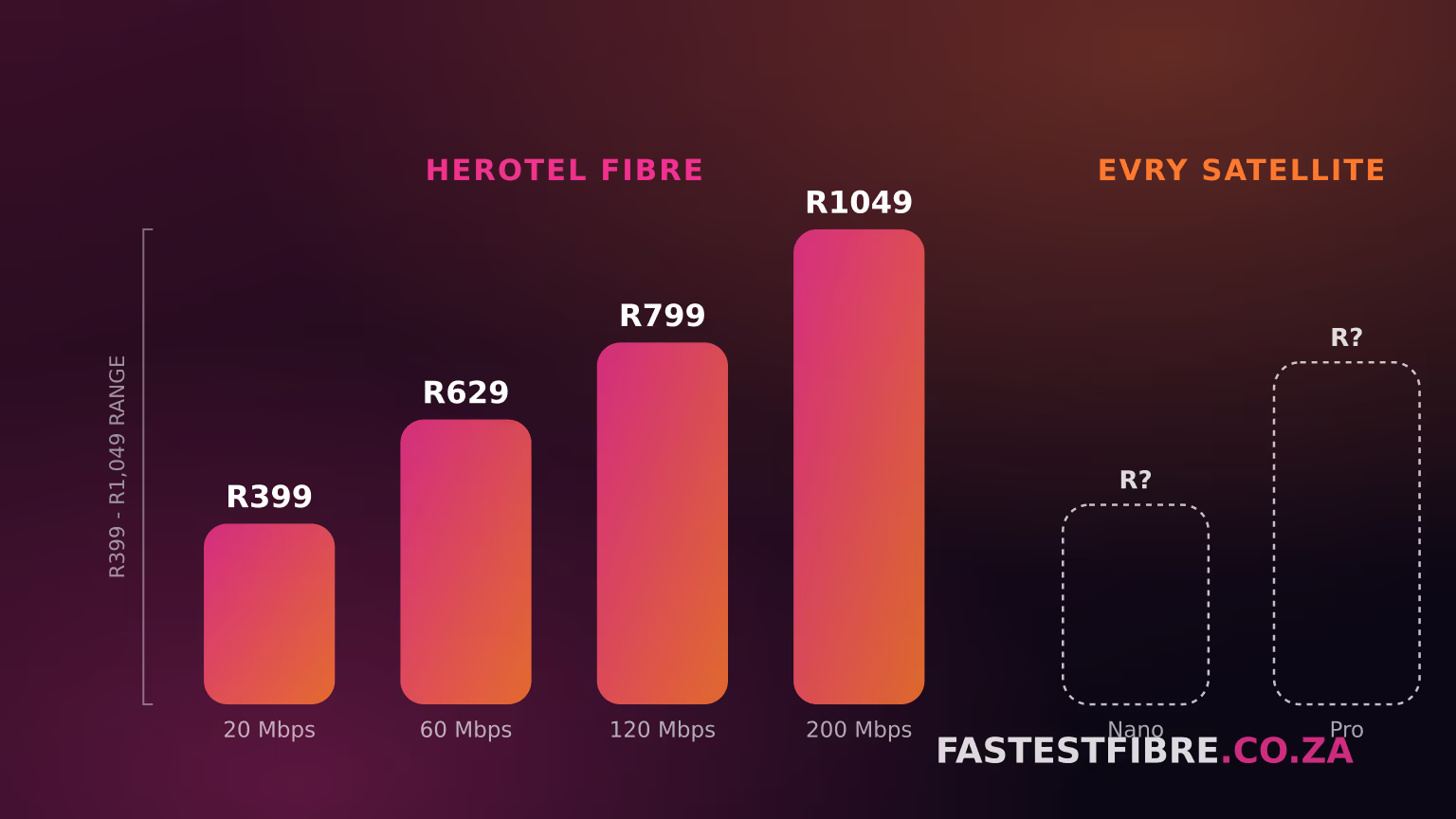
Herotel Just Told Us How Much Amazon's Satellite Internet Will Cost
Read article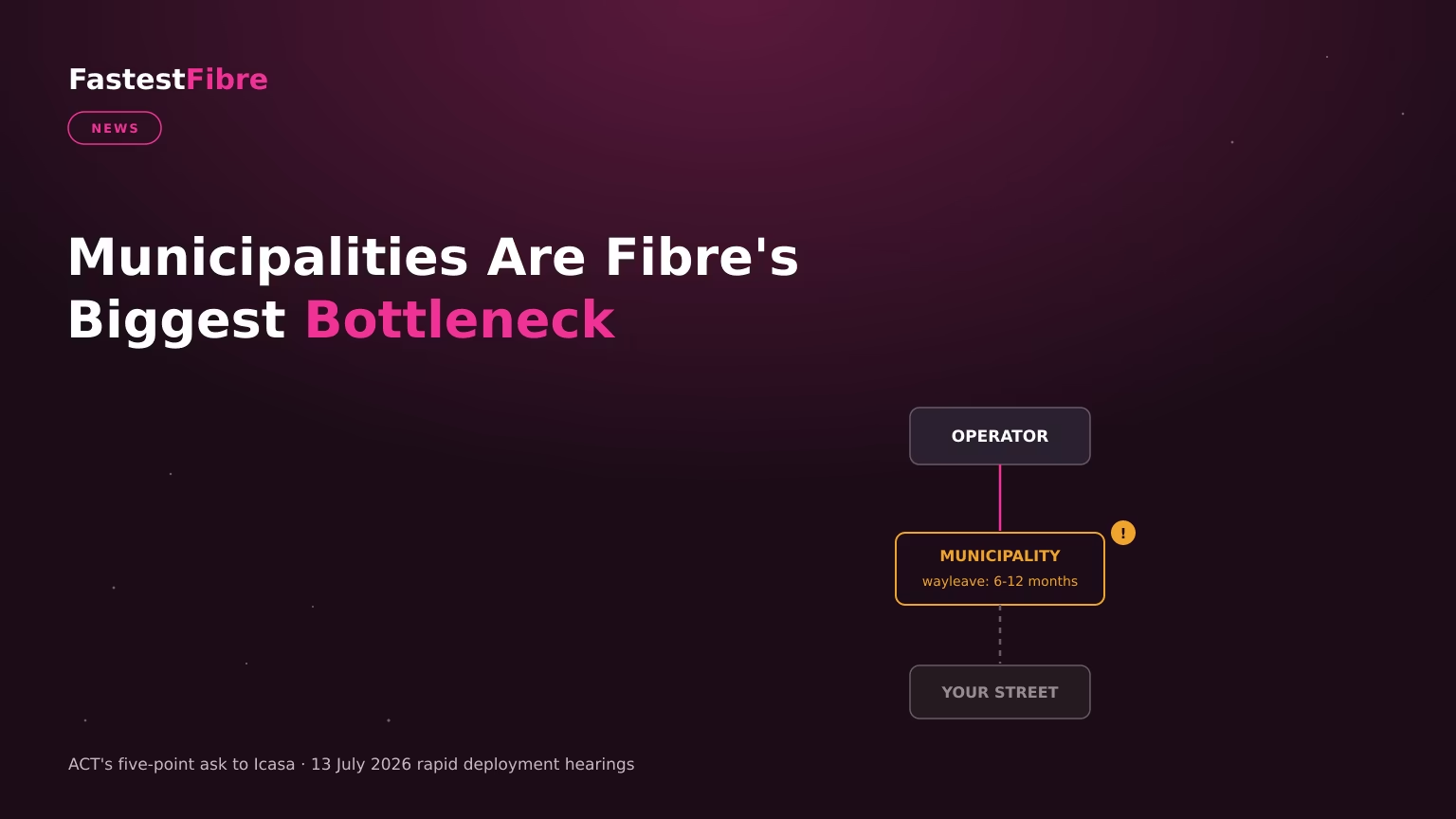
Municipalities Are Fibre's Biggest Bottleneck
Read article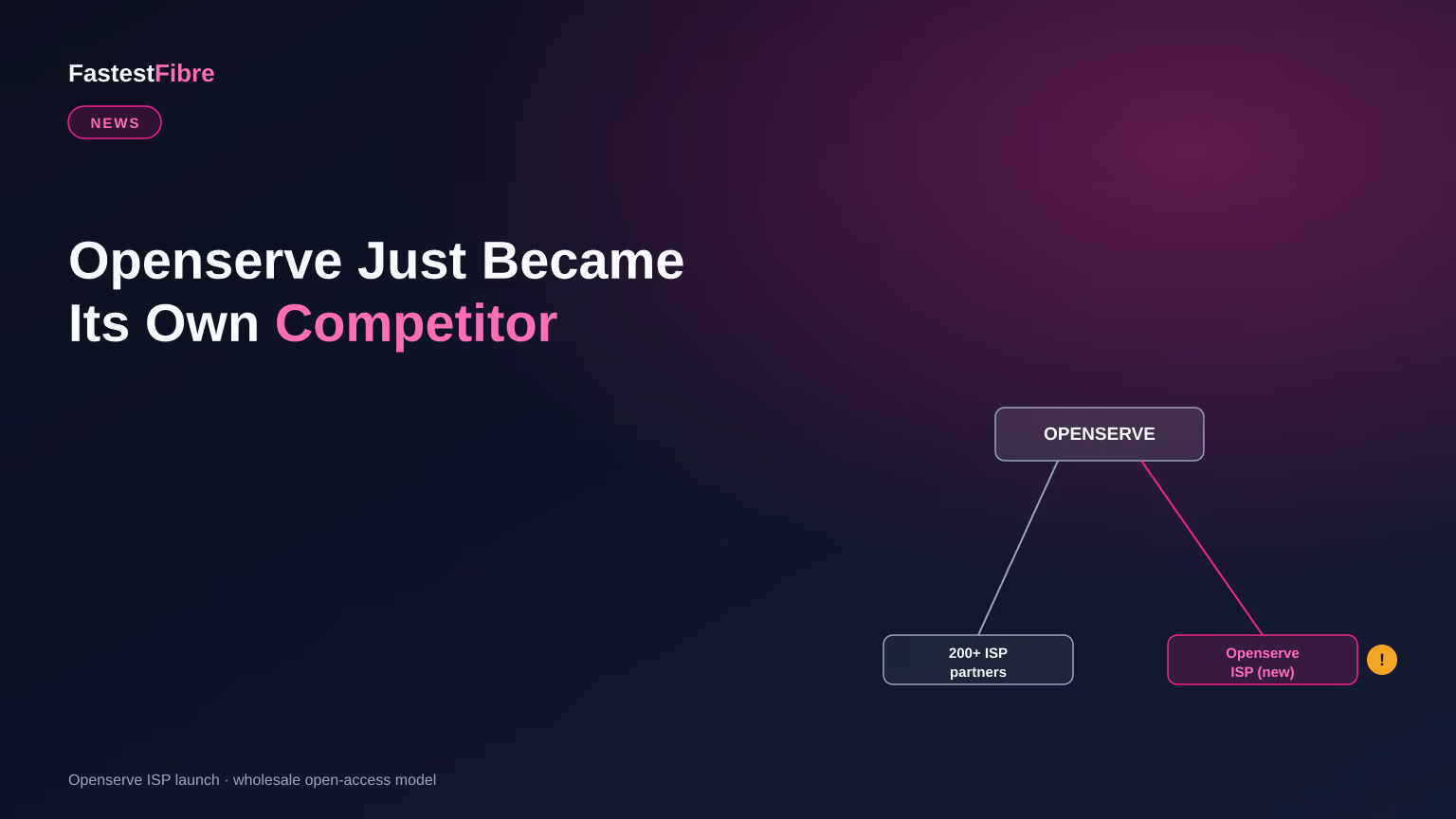
Openserve Just Became Its Own Competitor
Read article
Vodacom's R800m Top-Up: What the Herotel Deal Means for Maziv
Read article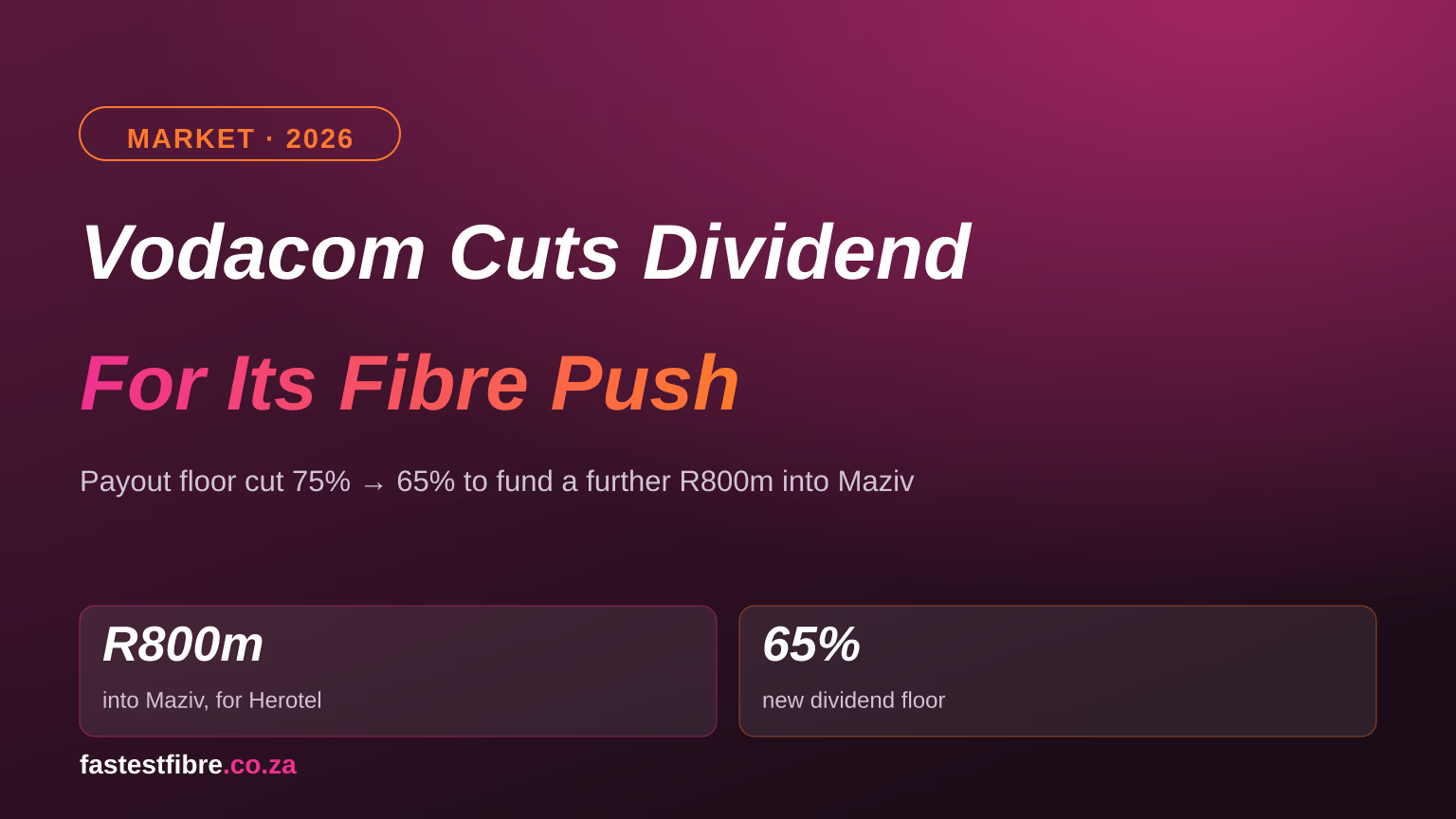
Why Vodacom Just Cut Its Dividend to Fund Its Fibre Push
Read article
Prepaid & Township Fibre Explained
Read article
Vuma Key vs Fibertime: SA's Prepaid Fibre Showdown
Read article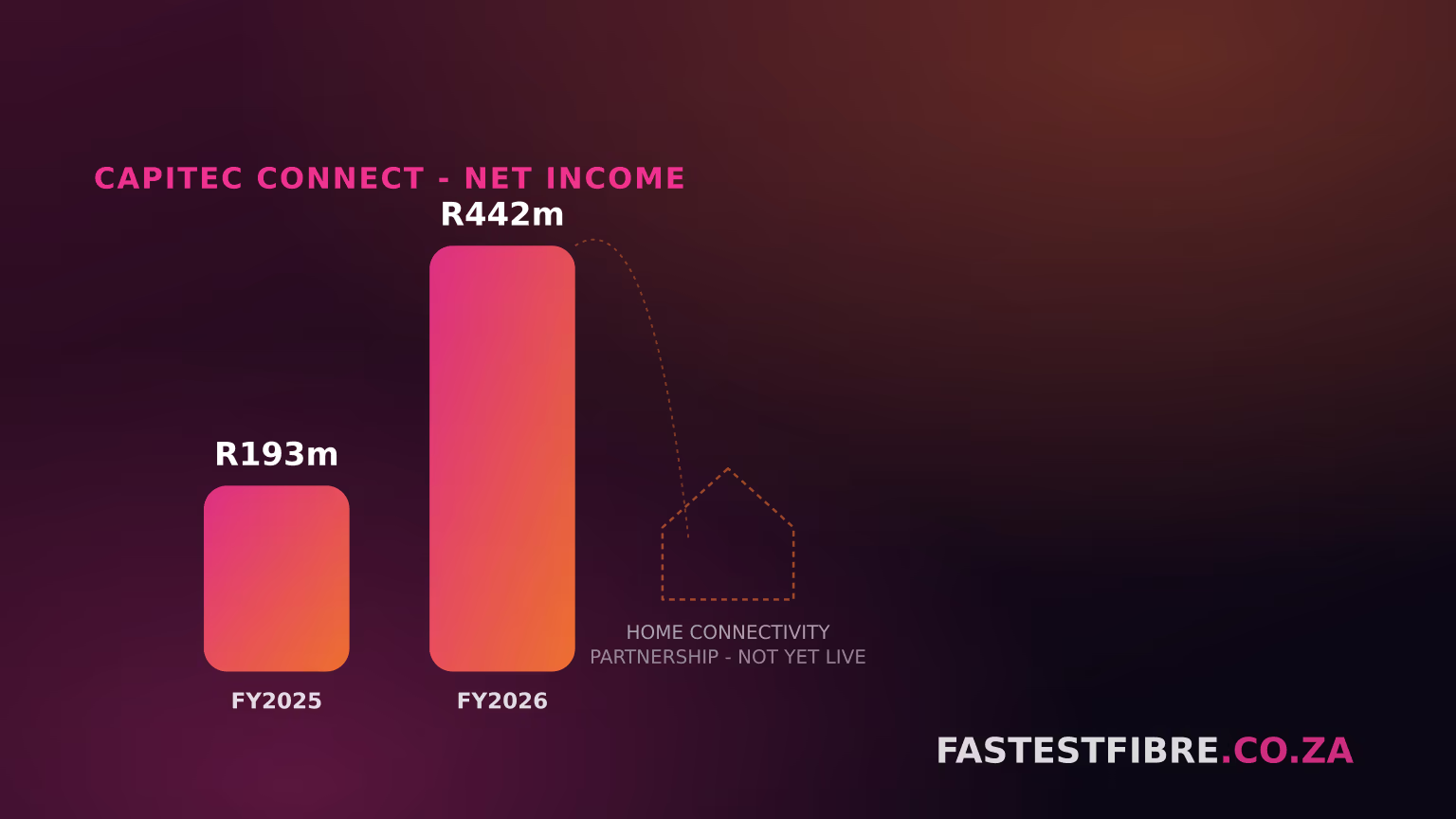
Capitec's Annual Report Just Revealed a Home Connectivity Ambition - Here's What's Actually Confirmed
Read article
Comsol's Wholesale 5G Network vs Fibre: What's Confirmed
Read article