Prepaid & Township Fibre Explained: Vuma Key, Fibertime & Pay-As-You-Go
Uncapped fibre with no contract and no credit check, from R5 a day. How prepaid and township fibre - Vuma Key, Fibertime and Vuma Reach - works in South Africa, what it costs, and why it beats mobile data.
In this article(8)
What is prepaid (pay-as-you-go) fibre?
Prepaid fibre is exactly what it sounds like: real fibre-to-the-home internet you pay for upfront, with no contract, no credit check and (usually) free installation. Instead of a monthly debit order tied to a 12 or 24-month term, you top up when you can - and if you don't, the service simply pauses rather than landing you with penalties.
It's the technology behind one of the most important shifts in South African connectivity: for the first time, fibre has become the cheapest way for many lower-income and township households to get online. The two flagship products are Vuma Key and Fibertime.
Prepaid fibre vs contract fibre vs mobile data
Three ways South Africans pay for internet, and why prepaid fibre wins for many:
- Contract (postpaid) fibre: a monthly debit order, often with a credit check and a fixed term. Great value, but inaccessible if you can't commit or don't have a bank account set up for debit orders.
- Prepaid fibre: recharge when you have the money, lapse without penalty, no credit check. Uncapped while active.
- Mobile prepaid data: the most expensive way to get online - small bundles can work out around R85/GB, and even 20GB bundles land near R15/GB.
That last point is the whole story. An uncapped prepaid fibre line at R99-R399/month delivers data that would cost hundreds or thousands of rand on mobile - which is why it's transformative for heavy users like students and streaming households. For the wider market picture, see the state of SA fibre in 2026.
Vuma Key explained
Launched by Vumatel in September 2024, Vuma Key brings uncapped fibre to households for from about R99/month - roughly R3.30 a day. It targets homes earning under R5,000/month, a market Vumatel estimates at around 10 million dwellings.
- Prepaid, no contract, no penalties for a missed recharge.
- Recharge anywhere: a single EasyPay reference at Boxer, Pick n Pay, PEP, Ackermans and more, or a recurring debit order.
- Free installation, and the line is uncapped, unshaped and unthrottled.
- Speeds start at an entry tier around 10 Mbps for a few devices, with higher tiers cited up to 100 Mbps (tiers vary by area - verify locally).
- You must recharge within 90 days to avoid termination, and reactivation has no reconnection fee.
Fibertime explained
Fibertime takes pay-as-you-go to its logical conclusion: R5 per day, where you buy time, not data. While a voucher is active the connection is uncapped and unthrottled.
- No contract, no debit order, no credit check. Your account is linked to your cellphone number.
- Buy vouchers at spaza shops or through banking and voucher apps (1Voucher, Blu Voucher, Flash, OTT), then add devices via the fibertime app.
- Free router and UPS battery, free install, no trenching.
- Speed is marketed up to 100 Mbps uncapped; real-world performance varies by location - an independent June 2026 test on Fibertime's Alexandra network actually measured gigabit-class speeds well above the marketed tier, though a separate Fibertime site tested far lower, so don't assume the same result everywhere.
Fibertime is scaling fast - connecting well over a thousand households a day, with a Nokia partnership targeting hundreds of thousands of underserved homes.
Vuma Reach - the step-up prepaid tier
Sitting above Key is Vuma Reach: still prepaid, still no contract or credit check, with a free router and standard install, but at higher speeds - commonly around R399 for 20/10 Mbps, R529 for 40/10, and R799 for 100/50. If you've outgrown a 10 Mbps entry line, it's the natural next step. Our Vuma Core vs Vuma Reach guide breaks down where Reach fits against Vumatel's premium product.
Who prepaid fibre is for - pros and cons
It's ideal for lower-to-middle-income and township households, anyone without a credit record or debit-order arrangement, and heavy data users (students, streamers) priced out by mobile data.
The upsides: cheap, uncapped, no contract or credit check, free install, and the freedom to lapse without penalty. The trade-offs: coverage is limited to where these networks have built, entry speeds are modest (around 10 Mbps), the cheapest tiers limit simultaneous devices, and daily pay-as-you-go can add up if you use it every single day (R5 x 30 = R150 versus a R99 flat month).
How to check coverage and sign up
Both products are location-specific, so start with a coverage check. For Fibertime, once your area is built you buy a voucher at a local spaza shop and activate via the app. For Vuma Key, recharge through EasyPay at major retailers or set up a debit order. You can also check broader fibre availability at your address on our fibre coverage map, and if you want a faster contract-free line, compare cheapest fibre deals.
Frequently asked questions
Help someone else pick the right fibre
Now go and compare the deals
Prices below come from our own deal tracking, checked on 19 October 2026.
What each package actually costs per megabit, not just per month.
See the dealsThe full catalogue in one sortable table - filter by speed, price or network.
See the dealsRanked by price across every ISP and network we track.
See the dealsRelated insights
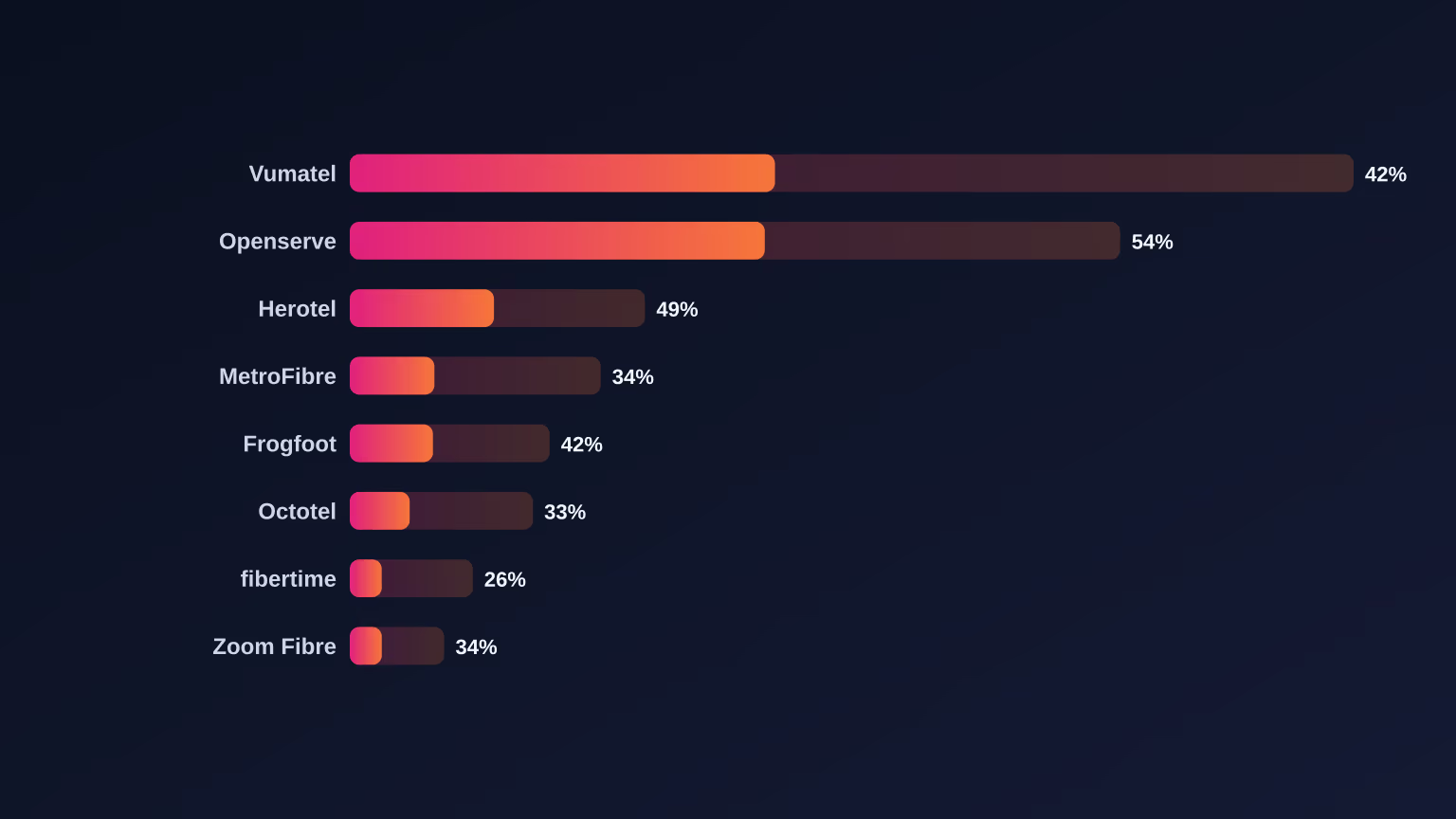
The Fibre Uptake Gap: Which SA Networks Actually Turn Coverage Into Customers
Read article
Openserve Launched Its Own ISP. Should You Switch, or Stick With a Reseller?
Read article
The April 2026 Openserve Price Increase: What Changed and What It Means for Your Bill
Read article
Did Webafrica Buy MWeb? What It Means for Your Fibre
Read article