Herotel Is Now South Africa's Biggest Fibre ISP - Here's What HeroFibre Costs
Herotel overtook every other South African ISP on connected FTTH homes in Q1 2026, per figures it discloses itself. Here's what HeroFibre actually costs today, verified against Herotel's own site, why being closed-access changes who it's really for - updated 18 August 2026 with FastestFibre's own before/after pricing records showing exactly how HeroFibre's tiers were repackaged.
In this article(10)
- 01How Herotel became South Africa's biggest fibre ISP
- 02What HeroFibre actually costs today
- 03What we could - and couldn't - verify about a reported price increase
- 04Update, 18 August 2026: what Herotel's own pricing history shows
- 05Why Herotel is a different kind of "biggest" than Vumatel or Openserve
- 06A worked cost example: what a year of HeroFibre actually costs
- 07Should you choose HeroFibre?
- 08What we verified today, and what we couldn't
- 09Bottom line
- 10Frequently asked questions
How Herotel became South Africa's biggest fibre ISP
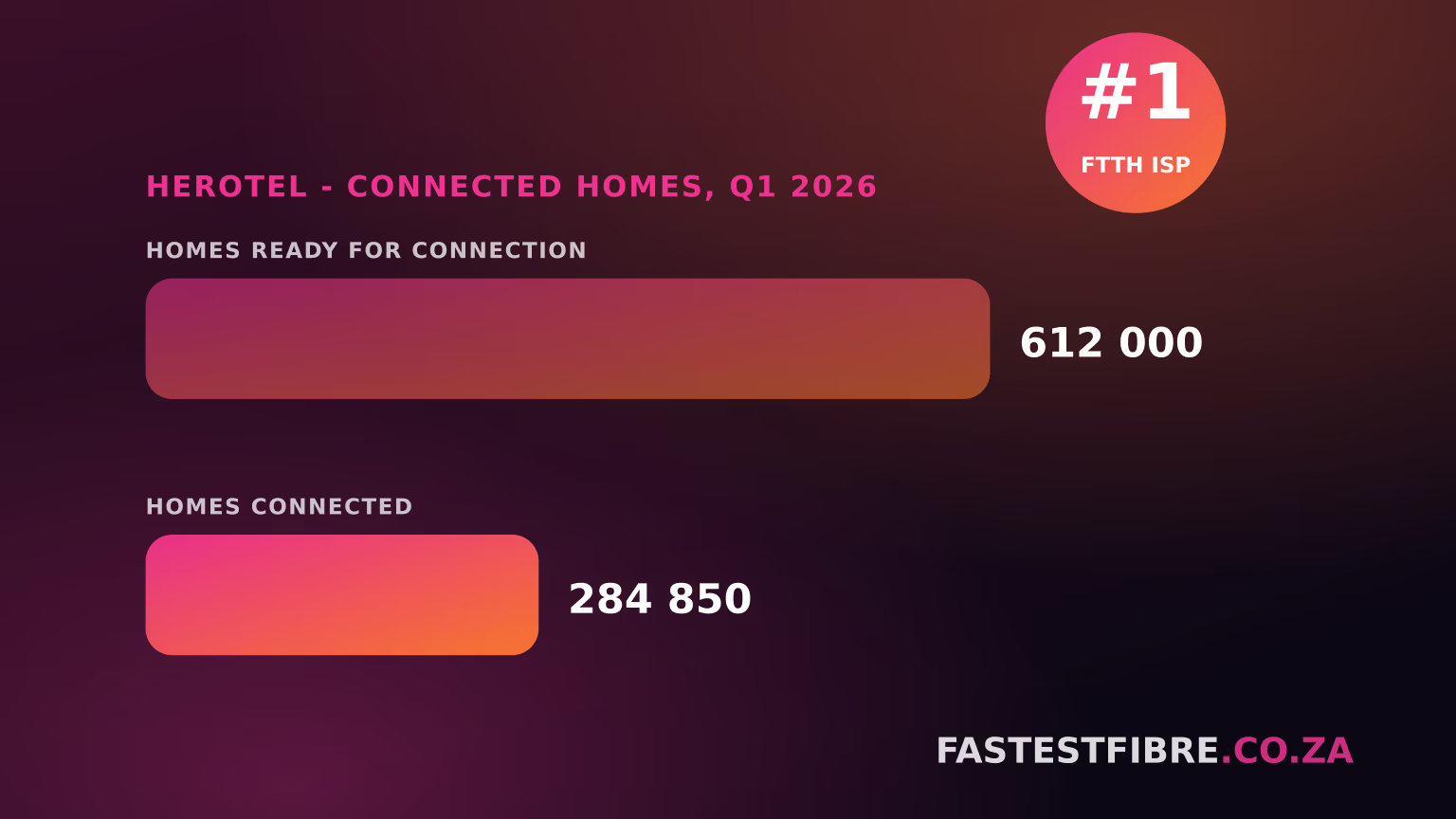
Herotel - a South African fibre and fixed-wireless operator that builds its own network and sells directly to customers rather than through resellers - became the country's largest FTTH ISP by connected homes in the first quarter of 2026. The ranking comes from the Africa Analysis FTTH Quarter Tracking report, and Herotel confirms the figures itself on its own blog: 284 850 connected FTTH homes, ahead of every other retail ISP tracked in the report. That count covers month-to-month and prepaid FTTH customers only - it excludes Herotel's separate 52 094-strong fixed-wireless base.
"South Africans want reliable, affordable connectivity that they can use, and that demand is visible in the communities where we build every day," Herotel CEO Van Zyl Botha said in the same post. Herotel now counts more than 350 000 active customers of all kinds across over 550 towns, cities and suburbs, with 612 000 homes already passed and ready to connect - a base it's aiming to grow by a further 750 000 homes in underserved areas.
| Metric | Value | Detail |
|---|---|---|
| Connected FTTH homes | 284 850 | Africa Analysis FTTH Quarter Tracking report, Q1 2026 - largest of any FTTH ISP in SA |
| Total active customers | 350 000+ | Includes 52 094 fixed-wireless customers, excluded from the FTTH ranking |
| Towns, cities and suburbs served | 550+ | Herotel's own footprint count |
| Homes ready for connection | 612 000 | Targeting +750 000 more in underserved areas |
One thing worth being precise about: this is a ranking by connected homes, not by network size. Vumatel, Openserve and the other big open-access fibre network operators (FNOs) still pass far more homes nationally than Herotel does on their own infrastructure - but they sell through dozens of competing ISPs, so no single one of those ISPs shows up with as many connected homes under one brand as Herotel does selling direct. We don't have a verified connected-homes figure for any individual open-access reseller ISP today, so we're not drawing a league table beyond what Herotel itself discloses.
What HeroFibre actually costs today
We checked herotel.com/fibre directly today rather than relying on a cached or secondhand price list. HeroFibre's line-up is 4 uncapped tiers, 3 of them symmetrical. That wording changed on 5 October 2026, and the reason is worth stating: Herotel rebuilt this page on 1 October and now prints a download and an upload figure in text on every card. Before that it published one headline speed per package as an image, and the only basis for calling the range symmetrical was a line of hero copy promising "even upload and download speeds" - which is no longer on the page. On the published numbers the entry tier is 20/10, not symmetrical, so we have corrected it. The three tiers above it are now confirmed symmetrical from Herotel's own paired figures rather than inferred from that sentence.
| Package | Speed | Monthly price | Price per Mbps |
|---|---|---|---|
| 20/10 Mbps | 20/10 Mbps | R399 | R19.95 |
| 60/60 Mbps | 60/60 Mbps symmetrical | R629 | R10.48 |
| 120/120 Mbps | 120/120 Mbps symmetrical | R799 | R6.66 |
| 200/200 Mbps | 200/200 Mbps symmetrical | R1 049 | R5.25 |
Every package includes a free-to-use router (Herotel's property for the life of the service) and no advertised upfront or installation cost. The best value per Mbps on the current line-up is the 200/200 Mbps tier at R5.25/Mbps - typical of uncapped fibre pricing, where the top tier usually beats the entry tier on a per-Mbps basis even though it costs more in absolute rand. Herotel's promotional package terms carry a 12-month minimum term; separately, Herotel also sells a R199 prepaid pass (a 14-day, 20/5 Mbps allowance) for customers who want to try the network or need connectivity without a monthly commitment - that's a distinct product from the four monthly HeroFibre packages above, not an activation fee on them.
What we could - and couldn't - verify about a reported price increase
MyBroadband reported this week that Herotel, described in its coverage as South Africa's biggest fibre ISP, raised prices on 1 August 2026 - single-digit percentage increases on monthly uncapped packages, and a larger percentage increase on prepaid vouchers. We're deliberately not repeating the exact percentage figures from that report as confirmed facts in this article.
| Detail | Status |
|---|---|
| A price increase was reported by MyBroadband, effective 1 August 2026 | Reported by a single outlet - not independently corroborated by us today |
| The exact percentage increase MyBroadband reported on monthly uncapped packages | Still not confirmed against a first-party Herotel statement - see the update below for what FastestFibre's own records do show |
| The exact percentage increase on prepaid vouchers | Same - not independently verified today |
| Today's live HeroFibre pricing (R399-R1,049 across four tiers) | Confirmed - fetched directly from herotel.com/fibre today, matching FastestFibre's own catalogue, last re-verified 12 August 2026 |
This matters because of the site's own rule on sourcing: a single outlet's report, on a page we can't independently open, doesn't clear the bar for stating a specific percentage as fact - two independent sources agreeing does. What we can stand behind is the pricing table above: whatever changed on 1 August, the R399-R1,049 tiers we fetched from Herotel's own site today are what a new HeroFibre customer actually pays right now.
Update, 18 August 2026: what Herotel's own pricing history shows
We didn't need MyBroadband's report to answer this - FastestFibre already had the answer in its own records. Every ISP catalogue on this site is re-verified against live sources on a rolling basis, and HeroFibre's four tiers were checked and recorded as they stood before 26 July 2026's confirmed repackage, then re-checked after. Lining the two up directly shows something MyBroadband's single blended percentage range didn't: this wasn't a straight price increase at all. Herotel replaced its entire tier line-up - three of four positions changed speed as well as price.
| Tier position | Before 26 Jul 2026 | From 26 Jul 2026 (current) | What changed |
|---|---|---|---|
| Entry | 25/25 Mbps - R609 | 20/20 Mbps - R399 | -R210/month (-34%) |
| Most popular | 75/75 Mbps - R649 | 60/60 Mbps - R629 | -R20/month (-3%) |
| Mid | 100/100 Mbps - R749 | 120/120 Mbps - R799 | +R50/month (+7%) |
| Top | 200/200 Mbps - R999 | 200/200 Mbps - R1 049 | +R50/month (+5%) - same speed, the only like-for-like tier |
Read tier by tier, the "increase" MyBroadband reported turns out to be a repackage with winners and losers, not a uniform hike. The entry tier actually got cheaper in absolute rand terms (R609 down to R399) but also slower (25 Mbps down to 20 Mbps) - Herotel effectively created a new, lower entry point rather than raising the old one. The former "most popular" 75/75 Mbps tier became a 60/60 Mbps tier at a marginally lower price. The old 100 Mbps tier gained 20 Mbps and R50/month. Only the top tier - 200/200 Mbps - kept an identical speed on both sides of the change, which makes it the one genuinely like-for-like comparison in the whole line-up: R999 to R1049, +5%. That figure sits squarely inside the "single-digit percentage" range MyBroadband reported for monthly packages - not proof of MyBroadband's exact average across every tier, but real, first-party, dated evidence that a genuine price rise did happen on at least the one tier where speed didn't also change, which is more than either FastestFibre or MyBroadband had confirmed on its own before today.
Why Herotel is a different kind of "biggest" than Vumatel or Openserve
The most important thing to understand about this milestone is that Herotel didn't win on the same playing field as Vumatel or Openserve. Herotel is closed access: it builds its own fibre network and is the only ISP allowed to sell on it. Vumatel and Openserve are open access: they build the network, then let dozens of competing ISPs - Webafrica, Afrihost, Mweb, RSAWeb, Cool Ideas and others - sell service over the same physical fibre.
| Network | Access model | Who you can buy from | ISP competition |
|---|---|---|---|
| Herotel | Closed access - Herotel builds the network and is the only ISP that sells on it | Direct from Herotel only | None - one ISP, one price |
| Vumatel | Open access - Vumatel builds the network, resold by many ISPs | Webafrica, Afrihost, Mweb, RSAWeb, Cool Ideas and others | High - ISPs compete on price and support over the same fibre |
| Openserve | Open access - Telkom's wholesale FNO, resold by many ISPs (and now Openserve's own retail ISP) | Webafrica, Afrihost, Mweb, RSAWeb and others, plus Openserve direct | High - same dynamic as Vumatel |
| Frogfoot | Open access - resold by multiple ISPs, plus Frogfoot's own direct Rise/Leap products | Webafrica, Afrihost and others, or direct from Frogfoot | Moderate - direct and reseller pricing both exist |
That structural difference explains both why Herotel could take the top spot on connected homes and why it isn't automatically the right pick for every reader. On an open-access network, being the "biggest ISP" would require beating Webafrica, Afrihost and every other reseller combined - a much higher bar. Herotel sidesteps that by being the only ISP on its own network, and by building specifically in the smaller towns and rural areas open-access FNOs haven't prioritised. The trade-off: if Herotel is the only fibre at your address, there's no second ISP to switch to for a better price or better support - you're either happy with Herotel, or you're on a different technology entirely.
A worked cost example: what a year of HeroFibre actually costs
Monthly prices are easy to compare tier to tier, but the annual cost - and the true cost per Mbps - is what actually determines value. Here's every current HeroFibre tier laid out both ways.
| Package | Monthly | Annual (12 months) | Price per Mbps |
|---|---|---|---|
| 20/10 Mbps | R399 | R4 788 | R19.95 |
| 60/60 Mbps | R629 | R7 548 | R10.48 |
| 120/120 Mbps | R799 | R9 588 | R6.66 |
| 200/200 Mbps | R1 049 | R12 588 | R5.25 |
For a typical household streaming on two or three screens, working from home on a video call, and running smart-home devices, the 60/60 Mbps tier at R629/month (R7 548/year) is the package Herotel itself flags as most popular, and it sits in the middle of the per-Mbps curve - noticeably cheaper per Mbps than the entry tier, without paying for headroom most single households won't use. Larger households running multiple 4K streams, cloud backups and several remote workers at once are the ones who actually get their money's worth out of the 200/200 Mbps tier.
Should you choose HeroFibre?
Is HeroFibre the right fibre for your address?
Herotel being South Africa's biggest FTTH ISP doesn't mean it's the biggest network everywhere - here's how to work out if it's actually your best option.
- Q1
Does an open-access network (Vumatel, Openserve, Frogfoot, Octotel, MetroFibre) already reach your address?
- Yes → Compare ISPs on that network first - open access means real price and support competition Herotel's closed-access model can't offer at the same address.
- No, but Herotel does → Herotel is likely your best or only fibre option. Check the package table above and confirm current pricing and the 12-month promotional term before signing up.
- Q2
Do you live in a smaller town, rural area, or a suburb underserved by the big open-access FNOs?
- Yes → This is exactly where Herotel has built out - its footprint across 550+ towns and cities is deliberately weighted toward places bigger operators haven't reached.
- Q3
Do you want the flexibility to switch ISPs later without moving house?
- Yes, that matters to me → Prioritise an open-access address if you have the choice - on Herotel, changing ISP means changing network entirely.
- Not a priority - I just want a working, well-supported connection → Herotel's local branches and 7-day WhatsApp support in the towns it serves are a real advantage many open-access resellers don't match.
What we verified today, and what we couldn't
Herotel's connected-homes ranking and every reach figure in this article (connected FTTH homes, fixed-wireless customers, total active customers, towns served, homes ready for connection, target additional homes, and the CEO quote) come directly from Herotel's own corporate blog, which we fetched and read today - a first-party source, not a secondhand citation. The Africa Analysis FTTH Quarter Tracking report itself is a paid industry dataset we don't have direct access to; we're relying on Herotel's own disclosure of the figures it drew from that report, not the underlying report itself.
HeroFibre's pricing table is fetched directly from herotel.com/fibre today and cross-checked against FastestFibre's own Herotel catalogue (src/data/herotelDeals.ts), which was independently re-verified against the same page on 12 August 2026 - both checks agree on all four tiers and prices.
What we could not verify on 16 August: the specific percentage figures behind MyBroadband's report of a 1 August 2026 Herotel price increase. mybroadband.co.za returned a 403 error to every automated fetch attempt we made, including a direct article URL and an AMP variant, and we found no public first-party notice on herotel.com stating an increase or its size.
Update, 18 August 2026: we went back to FastestFibre's own dated pricing records instead of trying mybroadband.co.za again. herotelDeals.ts held two first-party snapshots of the HeroFibre line-up - one from before the 26 July 2026 catalogue update, one from after - because this site re-verifies every ISP catalogue against live sources on a rolling basis regardless of news coverage. Comparing them directly, tier by tier, is what produced the repackage table above. We still have not obtained a first-party Herotel statement giving an exact average percentage increase or the prepaid voucher figures MyBroadband reported, so those two specific claims remain unconfirmed. What's now confirmed, from FastestFibre's own records rather than any secondary source: HeroFibre's line-up changed tier-for-tier around 26 July 2026, and its one directly comparable tier (200/200 Mbps) rose +5%.
Bottom line
Herotel's claim to being South Africa's biggest FTTH ISP by connected homes is real and Herotel discloses the figures itself: 284 850 connected homes as of Q1 2026, across a footprint of 550+ towns and cities most open-access FNOs haven't reached. HeroFibre itself costs R399 to R1 049 a month today, verified directly against Herotel's own site.
What the milestone doesn't tell you is whether Herotel is your best option - that depends entirely on whether an open-access network already competes for your address. Where it does, shop ISPs on that network first. Where Herotel is the only fibre in town, its combination of direct pricing, local support and a genuinely large existing customer base is a reasonable default, promotional term and all.
Frequently asked questions
Help someone else pick the right fibre
Now go and compare the deals
Prices below come from our own deal tracking, checked on 12 October 2026.
Ranked by price across every ISP and network we track.
See the dealsWhat each package actually costs per megabit, not just per month.
See the dealsEvery package at 1 Gbps and above, with the cheapest route to that speed.
See the dealsRelated insights
Herotel Fibre & Wireless: Coverage, Packages & Deals
Read article
The Vumatel-Herotel Acquisition, Explained
Read article
Frogfoot Just Launched No-Contract Fibre From R399 - Here's What's In It
Read article
Prepaid & Township Fibre Explained
Read article
Vodacom's R800m Bet on Maziv and Herotel
Read articleSA Fibre Benchmarks: Price, Speed and Network Data
Read article
Icasa Just Settled the 6GHz Spectrum Fight: What It Means for Your Fibre Wi-Fi
Read article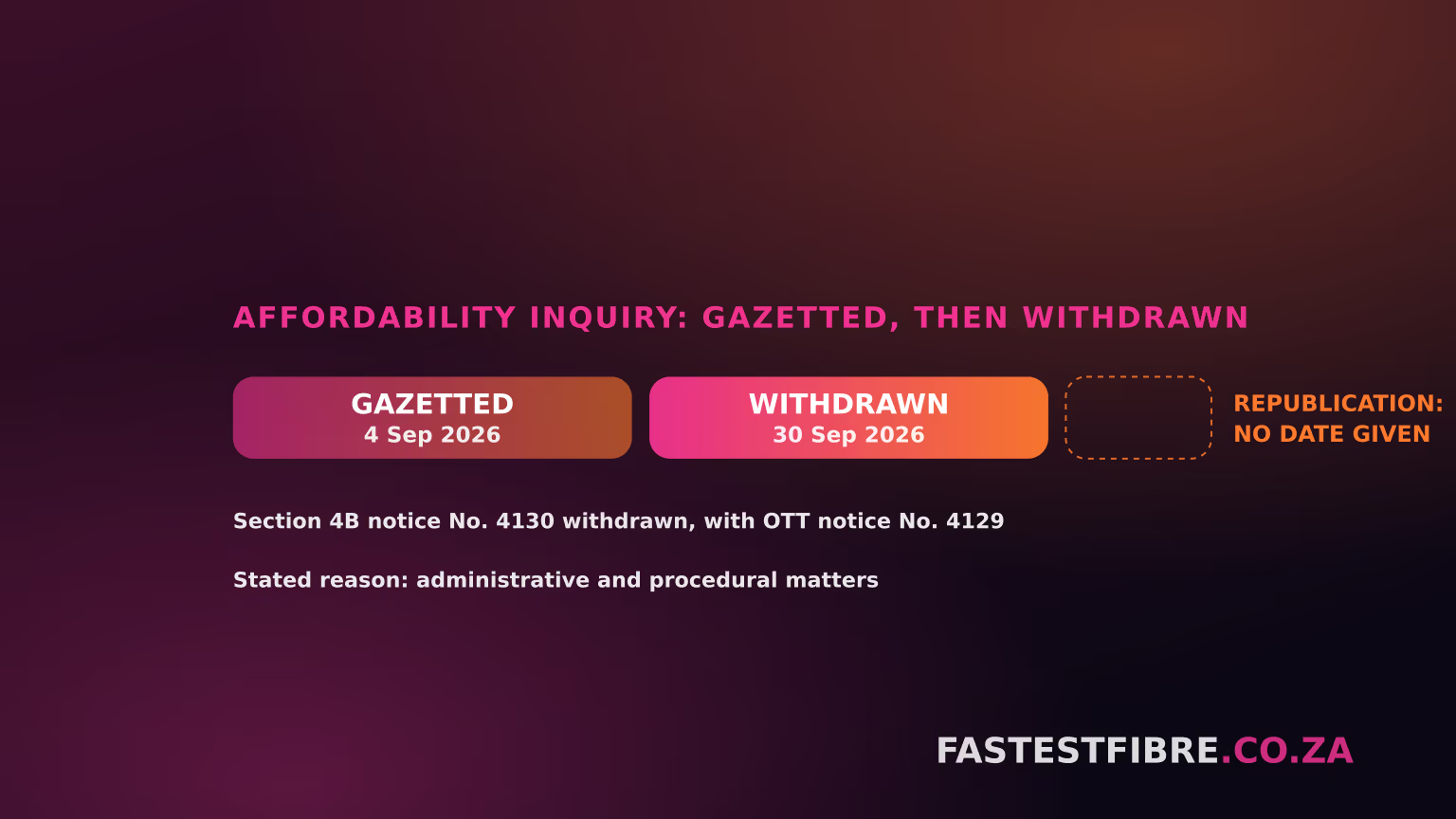
Icasa Withdrew Its Telecoms Affordability Inquiry Before It Began
Read article