MTN's H1 Results Say Fibre Is Overtaking Wireless - But Not Necessarily in South Africa
MTN Group's H1 2026 results, released 24 August 2026, show fibre now expanding materially faster than fixed wireless across its home broadband business - but that finding is group-wide and Nigeria-led. Here's exactly what MTN South Africa's own results confirm (R3.3bn H1 capex, a 'strong growth trajectory' with no number attached) and what's still just a headline.
In this article(6)
What MTN actually reported
MTN Group released its results for the six months to 30 June 2026 on 24 August 2026. The headline home-broadband finding, as reported by TelecomLead and TechAfrica News, is that fibre-to-the-home is now expanding materially faster than fixed wireless access (FWA) across MTN's home broadband business - pulling fibre's share of the group's active home customer base up, with MTN Nigeria specifically named as running fibre rollout and connections "materially ahead of plan."
For South Africa, the same results disclose a narrower set of figures: R3.3 billion of capex on an IFRS 16 basis during H1 2026 (R2.6 billion excluding leases), postpaid data consumption up 32% to 32.3GB and prepaid data consumption up 23.6% to 4.9GB, and a line describing home connectivity products Shesh@5G and MTN AirFibre as continuing "a strong growth trajectory" across both fixed wireless and fibre. No fibre-versus-FWA split, and no updated South Africa connections total, is given.
| Metric | Value | Detail |
|---|---|---|
| MTN South Africa H1 2026 capex | R3.3bn | R2.6bn excluding lease costs, on an IFRS 16 basis |
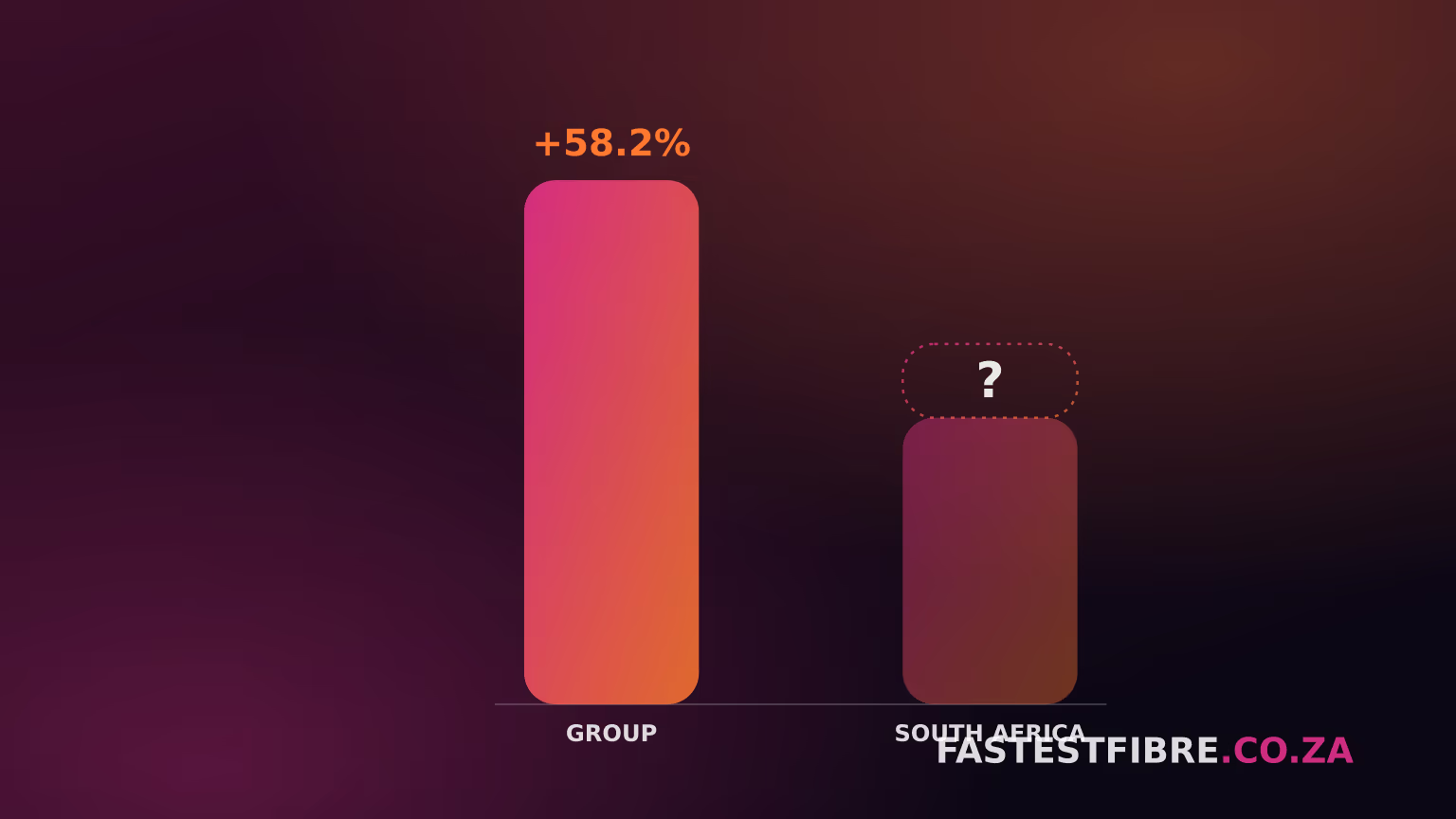
| MTN Group active home customers | +58.2% | Year-on-year, across all of MTN's markets combined |
| MTN Group H1 2026 capex | R19.7bn | Excluding leases - 16.6% capex intensity |
| Bayobab fibre wholesale revenue | +37.2% | MTN's pan-African fibre backbone arm, group-wide |
The group number that's being read as a South Africa story
It's an easy mistake to make: MTN Group is the same company that told this site's readers in June 2026 it wants 30% of South Africa's home internet market by 2030, so a group-wide "fibre is now growing faster than wireless" headline reads, at a glance, like an update to that South Africa story. It isn't - at least not one MTN has actually confirmed. The 58.2% active-home-customer growth figure spans every market MTN operates in, and the market called out by name for leading the fibre shift is Nigeria, not South Africa.
| Dimension | MTN Group (all markets) | MTN South Africa |
|---|---|---|
| Home customer base growth, quantified | +58.2% year-on-year (active home customers) | Described only as a "strong growth trajectory" - no percentage or connection count given |
| Fibre-vs-FWA growth mix disclosed | Yes - fibre (FTTH) now expanding materially faster than fixed wireless access, pulling up fibre's share of the home base | No technology breakdown published |
| Market leading the fibre shift | Nigeria - fibre rollout and connections reported running materially ahead of plan | Not identified as a lead market in this result |
| H1 2026 capex disclosed | R19.7bn excluding leases (16.6% capex intensity) | R3.3bn on an IFRS 16 basis, R2.6bn excluding leases |
| Named home broadband products | Group-wide FTTH plus FWA, deployed selectively by market | Shesh@5G (fixed wireless) and MTN AirFibre (dedicated fixed wireless); fibre mentioned only qualitatively |
None of this means the South Africa business is doing badly - the R3.3bn capex figure and the "strong growth trajectory" language both point the same direction as the group story. It means the specific, quotable claim - fibre overtaking wireless - hasn't actually been confirmed for South Africa, and readers deserve that distinction rather than a group figure quietly repackaged as a local one.
What can actually be tracked for South Africa
MTN South Africa doesn't publish a fibre-vs-FWA split, but it has given an overall home connections figure twice before - which makes the silence in this result worth showing rather than filling in.
| Disclosure | MTN SA home connections | Source |
|---|---|---|
| Q3 2025 trading update | ~344,000 | MTN Q3 2025 trading update |
| June 2026 update | ~401,000 | Business Day, 15 June 2026 |
| H1 2026 results (six months to 30 June 2026) | Not disclosed as a number - "strong growth trajectory" | MTN H1 2026 results, 24 August 2026, via TelecomLead |
The gap in that third row is the point. A company that gave a specific connections count twice in the space of a year and then switched to qualitative language ("strong growth trajectory") for its next result hasn't necessarily slowed down - but it also hasn't given anyone outside the company a way to check the claim. Until MTN South Africa publishes an updated number or a technology split, the most honest thing to say is that home broadband is growing, by MTN's own account, and that the rate and mix are not independently verifiable from this result.
What this changes if you're comparing MTN against fibre
Where this update actually matters
This is a disclosure-accuracy update, not a pricing or coverage change - use it alongside the fuller comparison guide below.
- Q1
Are you deciding between fibre and one of MTN's home products right now?
- Q2
Want the full four-brand strategy and 30%-by-2030 target breakdown?
Why a disclosure gap is worth an article on its own
This site's whole reason for tracking numbers like MTN's home base, rather than just repeating whichever headline travels furthest, is that group-level telecoms results get quoted out of their geographic context constantly - and South Africa is usually the market readers here actually care about. The same caution applies to backbone and financing stories that sound South Africa-specific but aren't: our look at EAAIF's $50 million commitment to Liquid's pan-African fibre backbone made the same distinction between a continent-wide financing event and what it actually changes for a South African fibre customer's line.
It's also worth being direct about what would resolve this properly: MTN South Africa disclosing an updated connections total, split by fibre and fixed wireless, in its next results or trading update. Until then, treat "MTN's fibre is overtaking its wireless in South Africa" as an unconfirmed extrapolation from a group-wide number - not a fact this site, or MTN's own South African disclosure, currently supports.
Frequently asked questions
Help someone else pick the right fibre
Now go and compare the deals
Prices below come from our own deal tracking, checked on 6 October 2026.
Ranked by price across every ISP and network we track.
See the dealsThe full catalogue in one sortable table - filter by speed, price or network.
See the dealsHow the major ISPs rank on price, support and real measured performance.
See the dealsRelated insights

MTN Wants to 'Own the Household': Inside Its Plan for 30% of SA's Home Internet Market
Read article
EAAIF Just Committed $50 Million to the Fibre Backbone Behind South Africa's International Speed
Read article
Openserve Just Became Its Own Competitor
Read article
Fibre vs LTE vs 5G in South Africa
Read articleSA Fibre Benchmarks: Speeds, Ratings & Prices
Read article
Six to 12 Months, Thousands of Rand: Why Municipalities Are Fibre's Biggest Bottleneck
Read article