Octotel Says the Fibre Rollout Race Is Over. Does Its Own Data Back That Up?
Octotel COO Jan van Zyl told TechFinancials on 2 September 2026 that South Africa's fibre industry is shifting from building networks to building products - and that Octotel expects three to five more years of growth from its existing footprint alone. We checked that against three numbers we could actually verify today: how much of Octotel's own homes-passed footprint is still unconnected, what really happened to its prices on 1 May 2026, and where it sits in ISPs' own perception survey.
In this article(9)
- 01The claim: the rollout race is ending, and Octotel is betting on products instead
- 02Is there really room to grow without digging more fibre?
- 03What actually happened to Octotel's prices in 2026
- 04Does Octotel's actual product range look like a network still just selling one thing?
- 05Is Octotel actually well-run, independent of its own PR?
- 06What a maturing fibre market actually means for your bill
- 07What we verified today, and what we couldn't
- 08Bottom line
- 09Frequently asked questions
The claim: the rollout race is ending, and Octotel is betting on products instead
In a 2 September 2026 interview with TechFinancials, Octotel chief operating officer Jan van Zyl argued that South Africa's fibre industry is entering "a fundamentally different phase." "The first ten years were about building a network that didn't exist," he said. "The next ten must be about building products, solutions and systems that don't exist yet." Van Zyl said Octotel anticipates "another three to five years' growth from its existing asset base" without needing to expand the physical network further, pointing to rising AI-driven demand for speed, consistency, latency and multi-device support, and framing satellite as a complement to fibre rather than a competitor for it.
That's a specific, testable set of claims from an operator with a clear interest in the narrative landing well. Rather than repeat it as given, we checked it against three numbers this site could actually verify today: how much spare capacity really exists in Octotel's own footprint, what actually happened to Octotel's prices the last time its rate card changed, and where independent, third-party opinion of Octotel's operation - not its own PR - currently sits.
Is there really room to grow without digging more fibre?
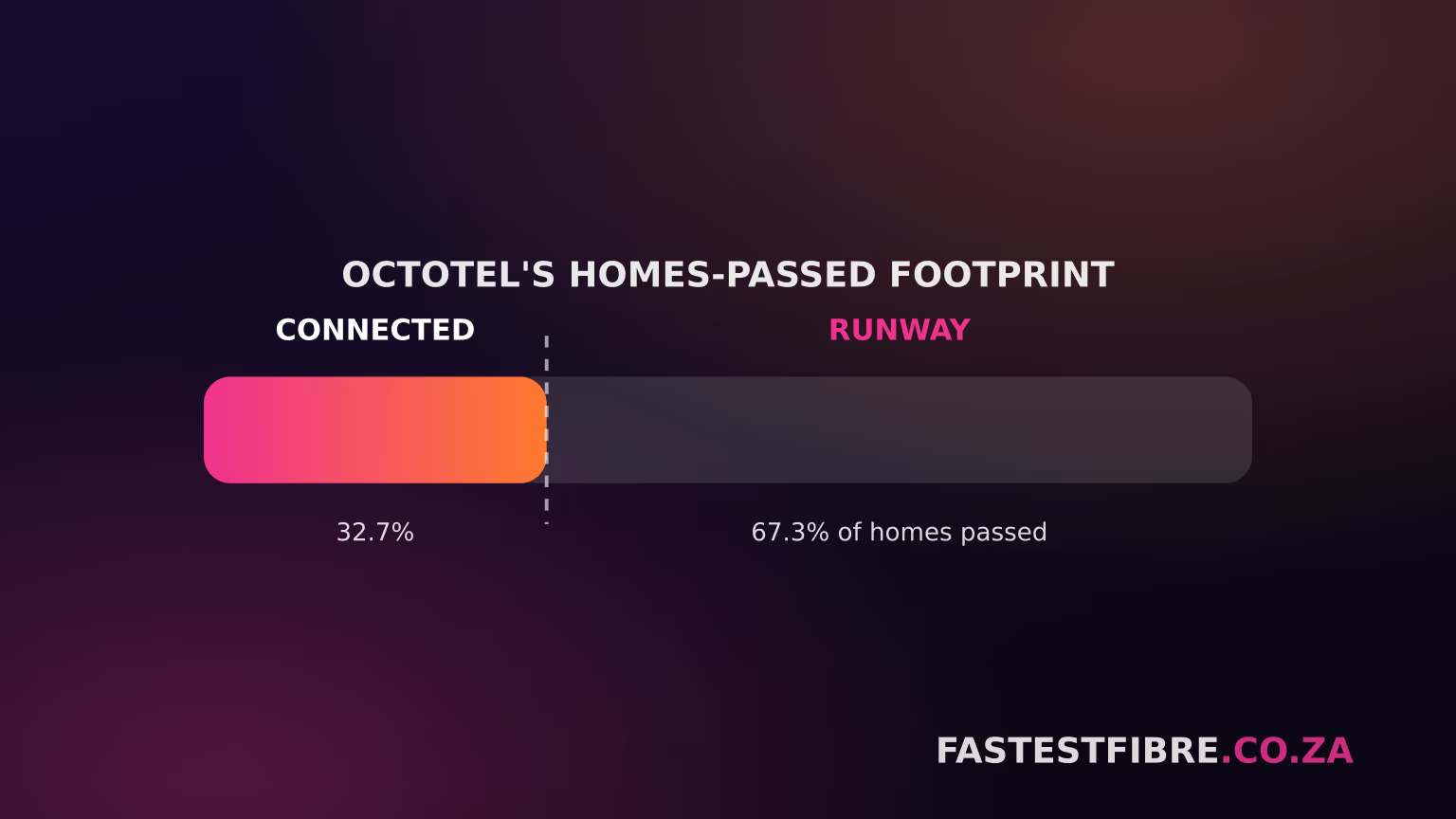
Van Zyl's "three to five more years from the existing asset base" claim rests on there being meaningful unconnected demand already sitting inside Octotel's network footprint. TeleGeography's most recent figures, as of Jun 2025, put Octotel's homes-passed count at 372 000, with 121 800 of those actually connected - a 32.7% take-up rate.
| Metric | Value | Detail |
|---|---|---|
| Homes passed | 372 000 | Octotel's network footprint, Jun 2025 |
| Homes connected | 121 800 | 32.7% of homes passed |
| Passed but unconnected | 250 200 | Homes already reachable without laying a metre of new fibre |
| Source | TeleGeography | Jun 2025 |
A 32.7% connect rate means roughly two out of every three homes Octotel's fibre already runs past are not yet paying customers. That's a genuine, quantifiable runway - the kind of spare capacity that supports "grow the base without laying more cable" as a real strategy rather than just a talking point. It doesn't confirm the specific "three to five years" timeline, which depends on how fast Octotel and its reseller ISPs can actually convert that unconnected footprint into paying customers - a rate this data doesn't tell us. But the premise the claim depends on - that there's meaningful spare capacity to sell into - checks out on this network's own published numbers.
What actually happened to Octotel's prices in 2026
A "product development, not just price extraction" story should show up in how a network actually prices its range, not just in an interview. Octotel's last confirmed wholesale rate card change took effect on 1 May 2026, covering eight published tiers from its entry 25 Mbps promotional package up to its 2500/2500 Mbps symmetrical top tier.
| Tier | Old price | New price | Change |
|---|---|---|---|
| 25/25 Mbps (promo) | R649 | R699 | +7.7% |
| 55/25 Mbps | R759 | R799 | +5.3% |
| 100/100 Mbps | R959 | R989 | +3.1% |
| 150/150 Mbps | R1 089 | R1 139 | +4.6% |
| 300/200 Mbps | R1 259 | R1 299 | +3.2% |
| 500/200 Mbps | R1 429 | R1 479 | +3.5% |
| 1000/200 Mbps | R1 729 | R1 789 | +3.5% |
| 2500/2500 Mbps | R2 349 | R2 349 | No change |
7 of the 8 tiers went up, but the 2500/2500 Mbps package - Octotel's fastest, most expensive product - was held flat at R2 349, the only tier on the card with no increase at all. That's not the pattern of an operator purely extracting margin from a network it no longer needs to invest in - a pure extraction play raises everything, including (especially) the premium tier with the least price-sensitive buyers. It's also not a price freeze across the board. The honest read: Octotel raised prices broadly in line with the rest of the industry this year, while making one visible, targeted exception at the top of its range - consistent with, but far short of proof of, a shift toward competing on product rather than pure price.
Here's how that compares with the other networks that published a confirmed 2026 rate-card change, using the same tracked-change dataset behind this site's full price-increases timeline.
| Network | Effective | Avg. change | Tiers counted |
|---|---|---|---|
| Frogfoot | 1 Feb 2026 | +5.4% | 10 |
| Openserve | 1 Apr 2026 | +3.2% | 8 |
| Vumatel | 1 Apr 2026 | Unpublished | - |
| Octotel | 1 May 2026 | +3.9% | 8 |
| MetroFibre | 1 Jun 2026 | Unpublished | - |
Does Octotel's actual product range look like a network still just selling one thing?
FastestFibre's own tracked catalogue currently lists 38 live Octotel packages, spanning 20 Mbps up to 2500 Mbps download, with 16 of those symmetrical (matched upload and download) - the tier structure a network selling to both budget households and symmetrical-upload buyers (small businesses, content creators, remote workers) would be expected to carry if it were genuinely diversifying beyond a single flagship product. A network purely defending its installed base on price would have less reason to maintain a range this wide.
This is circumstantial, not conclusive - a broad tier range could equally be a legacy of how Octotel has always sold fibre, not evidence of a 2026 strategic pivot. We're not aware of a verifiable, dated way to test "product development" as a change in direction rather than a continuation of existing practice, and we're not presenting tier breadth as proof of van Zyl's claim - only as a fact that is at least consistent with it.
Is Octotel actually well-run, independent of its own PR?
The clearest independent evidence available is ISPA's own February 2026 fibre network operator perception survey - see this site's full coverage of that survey for the complete ranking and sourcing. It isn't a customer satisfaction poll; it's the resellers who actually depend on Octotel's network - Afrihost, Webafrica, Mweb and dozens of others - rating how well it performs as a wholesale partner.
| Network | Score |
|---|---|
| OCTOTEL | 7.5 / 10 |
| OPENSERVE | 6.5 / 10 |
| METROFIBRE | 6.4 / 10 |
| LIQUID INTELLIGENT TECH | 6.1 / 10 |
| FROGFOOT | 6.1 / 10 |
| LINK AFRICA | 5.8 / 10 |
| DARK FIBRE AFRICA | 5.8 / 10 |
| VUMATEL | 5.6 / 10 |
Octotel topped the "major" networks at 7.5/10, rated by 18 member ISPs - ahead of every other large operator, including Openserve and Vumatel. That's independent, third-party evidence of operational quality, not something Octotel itself is asserting. It supports the general credibility of van Zyl as a spokesperson on operational maturity, even though the survey doesn't measure "product development" directly.
What a maturing fibre market actually means for your bill
Should you expect fibre to keep getting cheaper, or expect something else?
If South Africa's fibre market really is shifting from a rollout race to a product race, the thing you should watch for changes - here's how to read what happens next.
- Q1
Are you expecting fibre prices to keep falling the way they did during the rollout race?
- Yes → Temper that expectation. A market past its rollout phase competes less on headline price cuts and more on bundled value - routers, mesh Wi-Fi, whole-home coverage, service-level guarantees. Compare total package value, not just the advertised monthly rand figure.
- No, I expect prices to keep rising → That's the more consistent read of 2026's actual rate-card changes - most networks raised most tiers this year. Budget for continued modest increases and re-verify your own network's next confirmed change before renewing.
- Q2
Are you choosing a network partly on reputation for reliability and support?
- Yes → ISPA's own survey data is the most independent signal available - Octotel currently leads the major networks, for whatever that's worth measured against price and coverage at your specific address.
- No, price and coverage matter more to me → Reasonable - a perception survey measures wholesale operational quality, not your household's actual day-to-day speed. Check live coverage and pricing at your address directly.
What we verified today, and what we couldn't
Jan van Zyl's quotes and the framing of Octotel's strategy come from TechFinancials' 2 September 2026 article, fetched and read directly today. Octotel's homes-passed and homes-connected figures come from TeleGeography, as already sourced on this site's /benchmarks/ page - not a new or separately estimated figure. The 8-tier rate-card comparison is drawn from this site's own tracked price-change record for Octotel's confirmed 1 May 2026 change, previously published and sourced in the full 2026 price-increases timeline. The product-range figures (38 live packages, 20-2500 Mbps, 16 symmetrical) are computed live from FastestFibre's own deal database at build time, not retyped. The ISPA survey score is drawn from this site's existing, independently sourced coverage of that survey, linked above.
What we could not verify today and are therefore not stating as fact: Octotel's specific "three to five years" growth timeline, any internal target for connect-rate improvement, and whether the 1 May 2026 pricing pattern (broad increases, one frozen top tier) reflects a deliberate strategy or a one-off. We are treating the interview as van Zyl's stated position and Octotel's own PR framing, not as independently confirmed fact, and have flagged every place in this article where a claim rests on that interview alone rather than on data we could check ourselves.
Bottom line
Octotel's own numbers back up the least controversial part of its COO's claim: there is real, quantifiable spare capacity in its existing footprint, and its ISPA survey standing gives independent weight to "well-run." The pricing evidence is more mixed - most tiers went up in 2026, with one notable, targeted exception at the top of the range - which is consistent with a shift toward product-led competition without being proof of one. Treat "the rollout race is over" as a plausible, partially-evidenced industry thesis from an interested party, not a settled fact - and judge any network, including Octotel, on the price, coverage and reliability data available at your own address rather than on an executive's framing of where the market is headed.
Frequently asked questions
Help someone else pick the right fibre
Now go and compare the deals
Prices below come from our own deal tracking, checked on 19 October 2026.
Ranked by price across every ISP and network we track.
See the dealsThe full catalogue in one sortable table - filter by speed, price or network.
See the dealsHow the major ISPs rank on price, support and real measured performance.
See the dealsRelated insights
Octotel Fibre Deals: Every Package Compared
Read article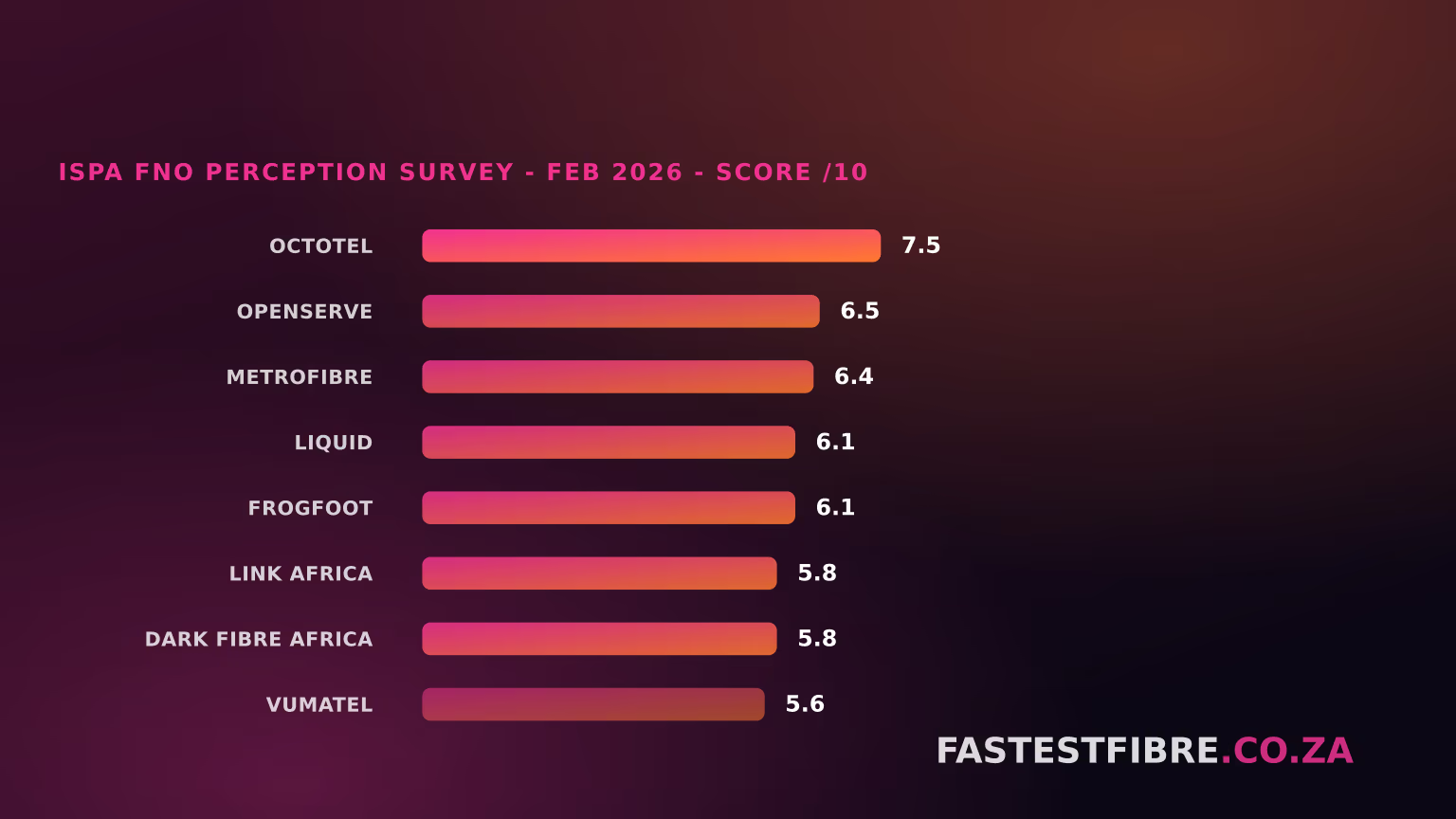
SA's ISPs Just Ranked Every Fibre Network
Read article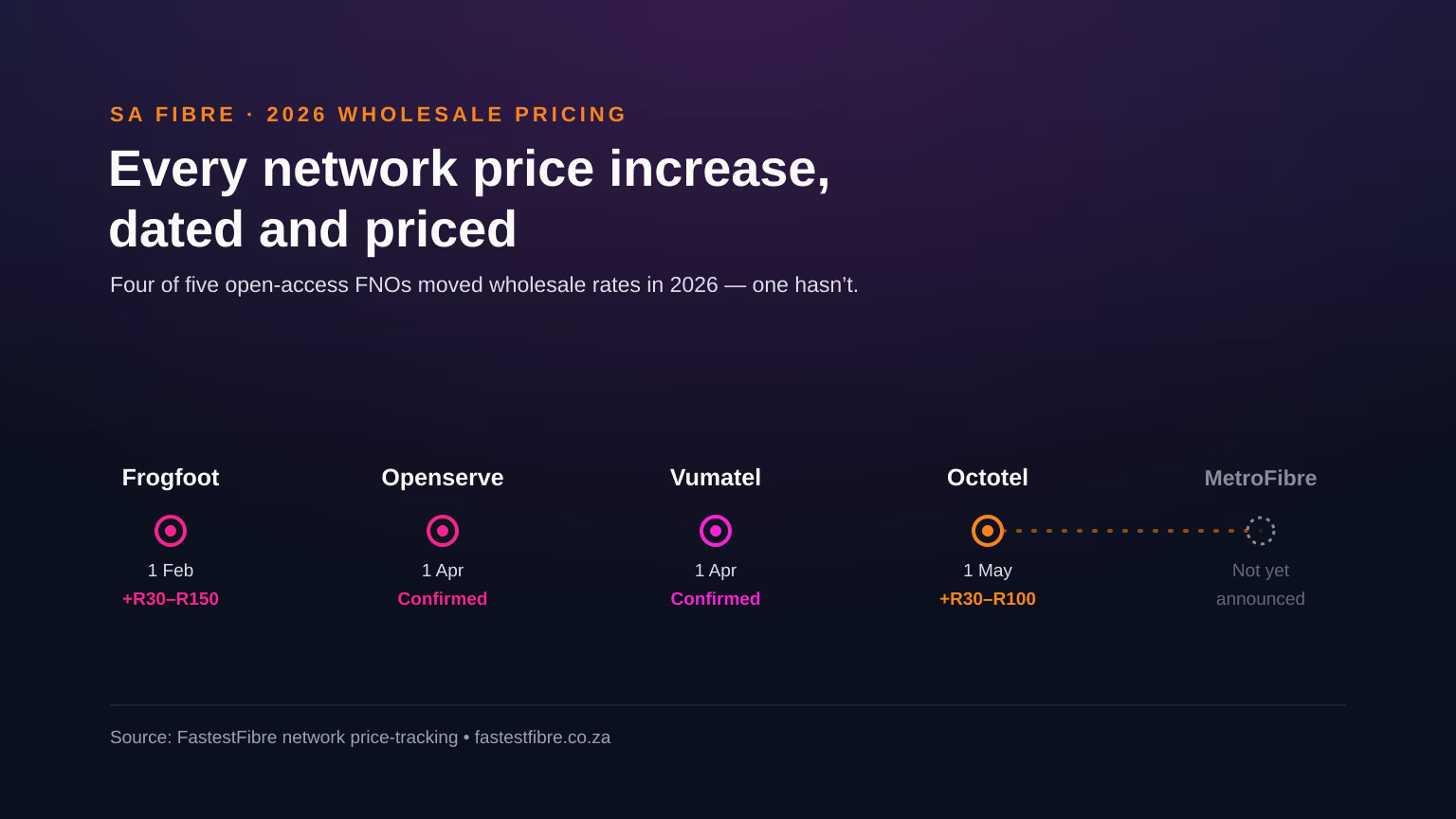
Every SA Fibre Price Increase in 2026, Tracked
Read article
Openserve vs Vumatel: Which Network Should You Choose?
Read article
The Vumatel-Herotel Acquisition, Explained
Read articleSA Fibre Benchmarks: Price, Speed and Network Data
Read article
Openserve Fires Back in the Fibre ISP Row
Read article
Openserve's CEO Says Its New ISP Will Close a 722,000-Home Connectivity Gap
Read article