Webafrica Vumatel 100/100 Review: Is It Still the Sweet Spot in 2026?
We ran the line for six weeks across video calls, 4K streaming, cloud backups and online gaming. Here's the honest verdict on Webafrica's most popular Vuma plan.

In this article(5)
What you actually get for the money
Webafrica's headline 100/100 Mbps Vuma plan sits at R899/month as of April 2026, with no upfront installation fee, no early-termination penalty and a free TP-Link Archer AX23 Wi-Fi 6 router shipped to your door. The line itself is uncapped, unshaped and symmetric - same speed up as down, which is Vumatel's signature on the Core network.
The "free" router carries a once-off R249 delivery and activation fee on the first invoice. Standard installation (the Vumatel technician running fibre to your wall socket and patching it into the ONT) is genuinely free, normally a R1 699–R2 699 charge if you bought the line directly from a smaller ISP.
What's bundled
- 100/100 Mbps uncapped Vuma Core line
- TP-Link Archer AX23 Wi-Fi 6 router (Free-to-Use)
- Free standard installation
- Month-to-month, no contract, no early-termination fee
- 14-day go-live guarantee (R999 account credit if missed)
Real-world speeds vs advertised
We logged speed tests every two hours for 42 days against Speedtest.net, MyBroadband and Cloudflare's network test, plus a continuous bufferbloat monitor. The headline: Webafrica's Vuma 100/100 line delivered 96.4 Mbps down and 94.8 Mbps up on average, with peak-hour (19:00–22:00) numbers dropping by less than 4%.
Latency to Cape Town and Johannesburg POPs hovered between 4–8 ms, jitter stayed under 2 ms, and we measured zero packet loss across the test window. That's well inside the spec for clean video calls, low-jitter gaming and reliable cloud backup runs.
Where the line struggled
International speeds varied more - pulling from US-hosted CDNs averaged 88 Mbps and European mirrors landed around 92 Mbps. That's normal for SA fibre and not a Webafrica issue; the bottleneck is upstream peering rather than the local line.
The included router - good enough?
The TP-Link Archer AX23 is a dual-band Wi-Fi 6 router that lists for around R1 200 if you bought it standalone. In a typical 120m² apartment or 3-bedroom freestanding home, it covered every corner with at least 60 Mbps over Wi-Fi - meaning the bottleneck stays at your laptop's wireless card, not the router.
In larger homes (180m² and up), or anywhere with brick walls between the router and bedrooms, you'll see Wi-Fi drop to 25–40 Mbps in the worst rooms. That's fine for streaming and browsing but noticeable on file uploads and video calls. Solution: add a single mesh node (about R900 from TP-Link or Mercusys) and you're back to full line speed everywhere.
vs the realistic alternatives
At the 100/100 Vuma price point, the genuine competitors are MWeb (R899/month, identical line, similar router), Afrihost (R847/month, slightly better-specced router, R5 000 setup credit), and RSAweb (R949/month, includes a mesh node out the box).
Webafrica wins on the no-contract billing flexibility and the 14-day go-live guarantee. Afrihost edges it on raw price-per-Mbps. RSAweb wins for households that genuinely need whole-home coverage and don't want to add a mesh node themselves.
Verdict - who should buy this line?
Webafrica's Vuma 100/100 is the right answer if you want a future-proof line you can leave alone for two years without worrying about throttling, contracts or upgrade traps. The symmetric 100 Mbps means one household member uploading a 50 GB cloud backup doesn't kill another's video call.
If you live alone, work from home with mostly text and email, and have under 50m² to cover with Wi-Fi, the 50/50 line at R699/month does the same job for less. If you run a home server, a 4K security-camera array or a side-business that uploads daily video footage, look at the 200/200 tier instead.
For everyone in between - which is most South African households - this remains the closest thing to a default-buy fibre plan in 2026.
Help someone else pick the right fibre
Now go and compare the deals
Prices below come from our own deal tracking, checked on 12 October 2026.
What each package actually costs per megabit, not just per month.
See the dealsRanked by price across every ISP and network we track.
See the dealsEvery package at 1 Gbps and above, with the cheapest route to that speed.
See the dealsRelated insights
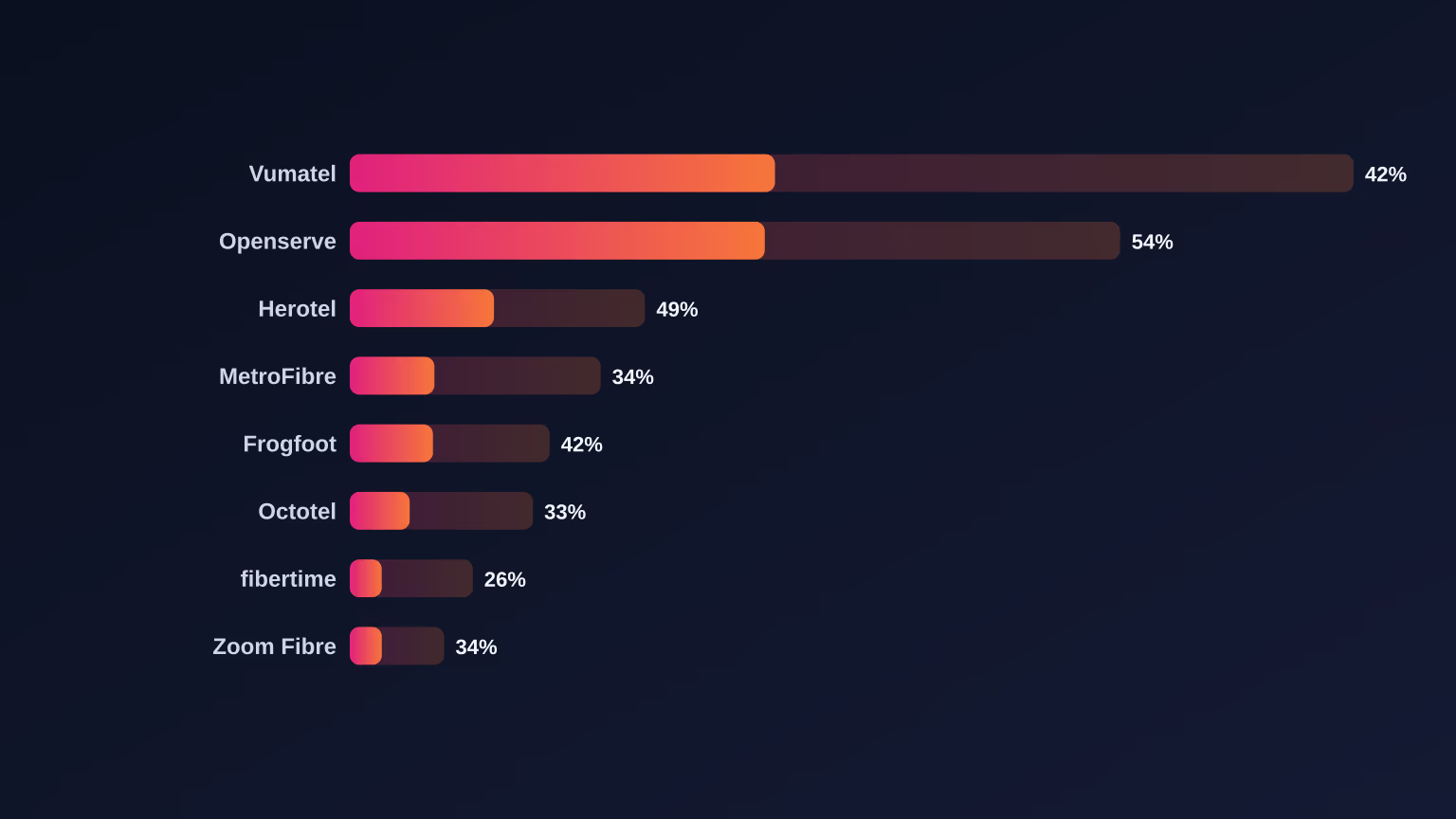
The Fibre Uptake Gap: Which SA Networks Actually Turn Coverage Into Customers
Read article
Openserve Launched Its Own ISP. Should You Switch, or Stick With a Reseller?
Read article
The April 2026 Openserve Price Increase: What Changed and What It Means for Your Bill
Read article
Did Webafrica Buy MWeb? What It Means for Your Fibre
Read article
MWeb vs Afrihost 2026: Which SA Fibre ISP Is Better?
Read article
Is MWeb Fibre Worth It in 2026? An Honest Review
Read article
MWeb LTE vs Fibre 2026: Which Should You Get?
Read article
MWeb's Free-to-Use Router Explained: What You Actually Get
Read article
MWeb Uncapped & Unshaped Fibre Explained
Read article
Cheapest MWeb Fibre Under R500/Month 2026
Read article
Is Uncapped Fibre Really Unlimited? Fair Use, Shaping & Throttling in SA (2026)
Read article
Webafrica vs Afrihost vs MWeb 2026: Which SA Fibre ISP Actually Wins
Read article
Best Fibre for Working From Home in SA: Why Upload Speed Decides (2026)
Read article
Vuma Key vs Fibertime: SA's Prepaid Fibre Showdown (2026)
Read article
Best 5G Home Internet in South Africa: Rain vs Vodacom vs MTN (2026)
Read article
Best Wi-Fi Router for Fibre in South Africa (2026)
Read article
Fibre Installation in South Africa: What to Expect (Step by Step)
Read article
How to Switch Fibre Providers Without Losing Connection (South Africa)
Read article
Prepaid & Township Fibre Explained: Vuma Key, Fibertime & Pay-As-You-Go
Read article
Fibre vs LTE vs 5G in South Africa: Which Should You Choose?
Read article
How Much Internet Speed Do You Really Need? (South Africa, 2026)
Read article
Why Is My Fibre Slow? How to Fix Slow Wi-Fi at Home (South Africa)
Read article
Is Starlink Legal in South Africa? The 2026 Status, Explained
Read article
Vodacom's R800m Top-Up: What the Herotel Deal Means for Maziv, Vumatel and SA Fibre
Read article
Vuma Core vs Vuma Reach: Which Vumatel Fibre Product Is Right for Your Home?
Read article
The April 2026 Vumatel Price Change: What Actually Happened and What It Means for Your Bill
Read article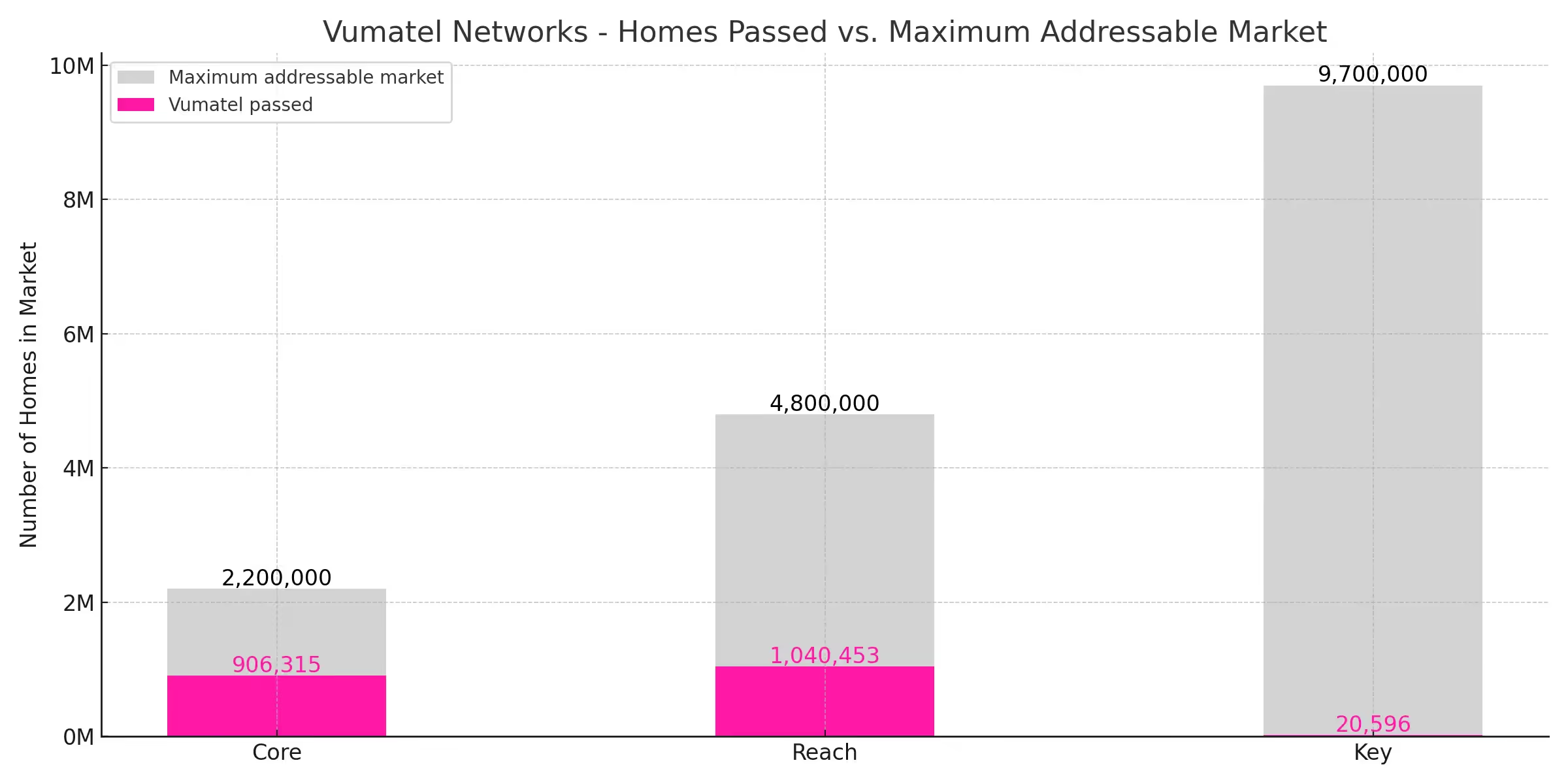
Vumatel Hits One Million Subscribers: What This Milestone Actually Means for South African Fibre
Read article
The Maziv Merger Explained: How Vumatel, Vodacom Fibre, DFA and Herotel Came Together
Read article
Vumatel's Herotel Acquisition: Why a Wholesale Network Bought a Retail ISP
Read article
How Vumatel's Open-Access Model Created 75+ ISPs and Shaped South African Fibre
Read article
The State of Fibre Internet in South Africa 2026
Read article
The Fastest Fibre Countries in the World 2026: Speedtest Global Index
Read article
Openserve vs Vumatel in 2026: Which Network Should You Actually Pick?
Read article
MetroFibre Did Raise Prices in 2026: The Confirmed June Wholesale and May MetroConnect Increases
Read article