The Fastest Fibre Countries in the World 2026: Speedtest Global Index
The Ookla Speedtest Global Index (March 2026) puts the UAE on top at 644.66 Mbps median fixed broadband download. South Africa lands 65th at 68.09 Mbps. Here's the full leaderboard, the fastest cities and what it means for SA.
In this article(7)
Country leaderboard (March 2026)
Every figure below is the median fixed broadband download speed reported by the Ookla Speedtest Global Index for March 2026. The "M/M move" column shows month-on-month rank change. The full ranking covers 105 countries - we show the top 30 by default with South Africa pinned for context. Tap the button to expand the complete table.
| # | Country | Median Mbps |
|---|---|---|
| 01 | 🇦🇪United Arab Emirates | 644.66 |
| 02 | 🇶🇦Qatar | 576.06 |
| 03 | 🇰🇼Kuwait | 372.76 |
| 04 | 🇧🇭Bahrain | 274.94 |
| 05 | 🇧🇷Brazil | 265.79 |
| 06 | 🇰🇷South Korea | 265.20 |
| 07 | 🇧🇳Brunei | 253.69 |
| 08 | 🇸🇦Saudi Arabia | 226.53 |
| 09 | 🇧🇬Bulgaria | 221.03 |
| 10 | 🇺🇸United States | 213.29 |
| 11 | 🇻🇳Vietnam | 200.54 |
| 12 | 🇸🇬Singapore | 197.89 |
| 13 | 🇩🇰Denmark | 192.16 |
| 14 | 🇪🇪Estonia | 188.58 |
| 15 | 🇰🇭Cambodia | 181.12 |
| 16 | 🇳🇱Netherlands | 178.00 |
| 17 | 🇱🇺Luxembourg | 173.19 |
| 18 | 🇴🇲Oman | 169.87 |
| 19 | 🇳🇴Norway | 167.28 |
| 20 | 🇲🇰North Macedonia | 166.15 |
| 21 | 🇷🇸Serbia | 164.60 |
| 22 | 🇫🇮Finland | 164.00 |
| 23 | 🇸🇪Sweden | 161.70 |
| 24 | 🇬🇪Georgia | 161.23 |
| 25 | 🇱🇻Latvia | 157.04 |
| 26 | 🇨🇳China | 156.98 |
| 27 | 🇲🇾Malaysia | 153.20 |
| 28 | 🇫🇷France | 152.50 |
| 29 | 🇽🇰Kosovo | 151.95 |
| 30 | 🇸🇮Slovenia | 145.54 |
| 65↓ jump ↓ | 🇿🇦South Africa | 68.09 |
Source: Ookla Speedtest Global Index, median country fixed broadband download speeds, updated March 2026.
Fastest cities in the world
Ookla also publishes a city-level leaderboard, which is often more useful than country averages because fibre performance varies enormously by metro. Abu Dhabi tops the world at 668.03 Mbps - higher than the UAE country median because outlying regions pull the national figure down. Of the 153 ranked cities, Cape Town sits 93rd and Johannesburg 107th.
| # | City | Median Mbps |
|---|---|---|
| 01 | Abu Dhabi | 668.03 |
| 02 | Ar-Rayyan | 659.09 |
| 03 | Dubai | 595.44 |
| 04 | Doha | 577.02 |
| 05 | Kuwait City | 371.41 |
| 06 | Rio de Janeiro | 370.16 |
| 07 | São Paulo | 357.36 |
| 08 | Seoul | 356.95 |
| 09 | Stockholm | 344.50 |
| 10 | Sofia | 322.21 |
| 11 | Skopje | 321.67 |
| 12 | Porto | 318.47 |
| 13 | Riyadh | 317.58 |
| 14 | Belgrade | 309.76 |
| 15 | Lisbon | 288.45 |
| 93↓ jump ↓ | Cape Town | 90.20 |
| 107 | Johannesburg | 72.67 |
Source: Ookla Speedtest Global Index, median city fixed broadband download speeds, updated March 2026. South African cities highlighted.
How does your line compare?
The fastest way to see where your home fibre sits on the global leaderboard is to run a speed test and compare the result. Our free in-browser speed test shows the South African median (68.09 Mbps) and the global median (109.29 Mbps) as benchmark markers directly on the dial - and lets you compare your result against any country in the Speedtest Global Index after the test finishes.
For most South African households, beating the national median means your line is doing its job. Beating the global median puts you ahead of more than half the world. Clearing 200 Mbps puts you in roughly the same league as a typical household in Singapore, Vietnam or Bulgaria.
What's actually moving the rankings
The top of the country table is dominated by Gulf states - the UAE, Qatar, Kuwait, Bahrain, Saudi Arabia and Oman all sit inside the top 18. The drivers are the same in each: small geographic footprint, dense urban populations, state-backed FTTH rollouts and aggressive 5G fixed-wireless overlays from Etisalat, du, Ooredoo and stc.
Brazil's jump to fifth (265.79 Mbps) is the most striking story of the last two years. Independent fibre ISPs (the so-called "ISPs alternativos") collectively passed more than 50 million homes between 2020 and 2025, and Rio de Janeiro and São Paulo now both clear 350 Mbps median.
On the way down: Serbia dropped 10 places month-on-month, Georgia dropped four, and Spain - long a European leader - now sits outside the top 50 of the country table (Spain's strength shows up at the city level, where Madrid and Barcelona stay competitive). Cambodia (+7) and Türkiye (+23 over recent months) are the biggest climbers.
Where South Africa actually sits
South Africa's median fixed broadband download in March 2026 is 68.09 Mbps, ranking 65th globally - up two places month-on-month. That puts SA ahead of Israel (65.96), Iraq (64.74) and Algeria (64.05). Morocco (77.54) is the only African country ahead of us; Egypt sits at 49.42, Kenya at 48.78, and Nigeria at 50.53.
At the city level, Cape Town leads SA at 90.20 Mbps (global rank 93), with Johannesburg at 72.67 Mbps (rank 107). The gap between the two metros is wider than you'd expect from coverage alone - it reflects how much of Joburg's footprint is still on older copper or first-generation FTTH builds.
For comparison, the global median across all countries Ookla measures is 109.29 Mbps - so SA's median sits roughly 38% below the global midpoint. The good news: that gap has closed every year since 2022 as Vumatel, Openserve, Frogfoot, Octotel and Metrofibre have densified their FTTH footprints.
What South Africa can learn from the leaderboard
Three patterns translate cleanly to the SA market:
1. Push gigabit pricing toward parity
The countries clearing 200 Mbps median have one thing in common: gigabit fibre is priced close to entry-level fibre. In SA the gap between a 100 Mbps and a 1 Gbps line is still around R700/month. Closing that gap is the single fastest way to lift the national median - and the good news is Webafrica, MWeb and Afrihost have all cut gigabit pricing aggressively in the last 12 months. See our honest gigabit buyer's guide for what's now available.
2. Keep the open-access model intact
Sweden (161.70 Mbps), Denmark (192.16), Finland (164.00) and Estonia (188.58) all run open-access wholesale fibre - exactly the model Vumatel and Openserve use here. It works: SA has at least eight viable retail ISPs in most metros, all selling on the same fibre. Compare with Germany (74.58 Mbps) where vertical incumbents have slowed FTTH rollout for years.
3. Switch off copper faster
France's experience (152.50 Mbps median, rank 28) shows the median jumps the moment copper is fully decommissioned because consumers are forced onto FTTH. Telkom has been running a structured copper sunset since 2023 but adoption among business and rural lines lags.
If you're shopping for fibre right now and want to see where SA actually delivers today, our best fibre deals page lists every verified package by network, price and speed - and our speed test will tell you exactly where your line sits versus the 109.29 Mbps global median.
Methodology and source
All speed and ranking figures in this article come directly from the Ookla Speedtest Global Index, updated March 2026. Ookla reports the median - not the average - download speed from real Speedtest measurements taken on fixed broadband connections in each country and city.
Median is the right number for "what does a typical household actually get": a handful of multi-gigabit users skew averages upward and misrepresent normal experience. Ookla applies a precision-threshold inclusion criterion (introduced June 2024) to remove statistically thin samples, and results are refreshed mid-month for the previous three months.
Global performance for March 2026: 109.29 Mbps download, 15.03 Mbps upload, 24 ms latency.
© Ookla, LLC. Speedtest® and Speedtest Global Index™ are registered trademarks of Ookla. Data cited here is referenced for non-commercial editorial use.
Help someone else pick the right fibre
Now go and compare the deals
Prices below come from our own deal tracking, checked on 19 October 2026.
What each package actually costs per megabit, not just per month.
See the dealsRanked by price across every ISP and network we track.
See the dealsEvery package at 1 Gbps and above, with the cheapest route to that speed.
See the dealsRelated insights
The Fibre Uptake Gap: Which SA Networks Actually Turn Coverage Into Customers
Read article
Openserve Launched Its Own ISP. Should You Switch, or Stick With a Reseller?
Read article
The April 2026 Openserve Price Increase: What Changed and What It Means for Your Bill
Read article
Did Webafrica Buy MWeb? What It Means for Your Fibre
Read article
MWeb vs Afrihost 2026: Which SA Fibre ISP Is Better?
Read article
Is MWeb Fibre Worth It in 2026? An Honest Review
Read article
MWeb LTE vs Fibre 2026: Which Should You Get?
Read article
MWeb's Free-to-Use Router Explained: What You Actually Get
Read article
MWeb Uncapped & Unshaped Fibre Explained
Read article
Cheapest MWeb Fibre Under R500/Month 2026
Read article
Is Uncapped Fibre Really Unlimited? Fair Use, Shaping & Throttling in SA (2026)
Read article
Webafrica vs Afrihost vs MWeb 2026: Which SA Fibre ISP Actually Wins
Read article
Best Fibre for Working From Home in SA: Why Upload Speed Decides (2026)
Read article
Vuma Key vs Fibertime: SA's Prepaid Fibre Showdown (2026)
Read article
Best 5G Home Internet in South Africa: Rain vs Vodacom vs MTN (2026)
Read article
Best Wi-Fi Router for Fibre in South Africa (2026)
Read article
Fibre Installation in South Africa: What to Expect (Step by Step)
Read article
How to Switch Fibre Providers Without Losing Connection (South Africa)
Read article
Prepaid & Township Fibre Explained: Vuma Key, Fibertime & Pay-As-You-Go
Read article
Fibre vs LTE vs 5G in South Africa: Which Should You Choose?
Read article
How Much Internet Speed Do You Really Need? (South Africa, 2026)
Read article
Why Is My Fibre Slow? How to Fix Slow Wi-Fi at Home (South Africa)
Read article
Is Starlink Legal in South Africa? The 2026 Status, Explained
Read article
Vodacom's R800m Top-Up: What the Herotel Deal Means for Maziv, Vumatel and SA Fibre
Read article
Vuma Core vs Vuma Reach: Which Vumatel Fibre Product Is Right for Your Home?
Read article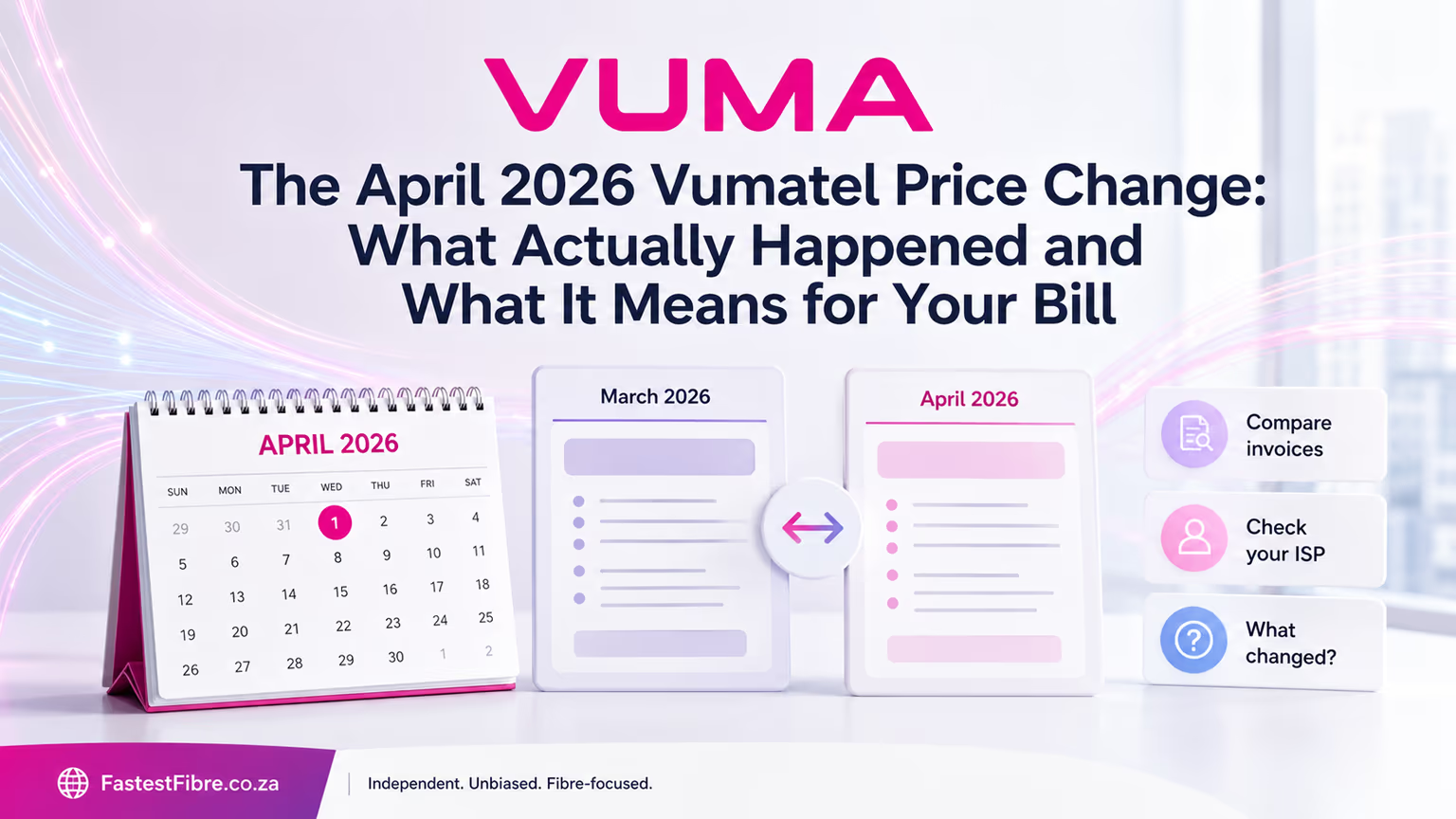
The April 2026 Vumatel Price Change: What Actually Happened and What It Means for Your Bill
Read article
Vumatel Hits One Million Subscribers: What This Milestone Actually Means for South African Fibre
Read article
The Maziv Merger Explained: How Vumatel, Vodacom Fibre, DFA and Herotel Came Together
Read article
Vumatel's Herotel Acquisition: Why a Wholesale Network Bought a Retail ISP
Read article
How Vumatel's Open-Access Model Created 75+ ISPs and Shaped South African Fibre
Read article
The State of Fibre Internet in South Africa 2026
Read article
Webafrica Vumatel 100/100 Review: Is It Still the Sweet Spot in 2026?
Read article
Openserve vs Vumatel in 2026: Which Network Should You Actually Pick?
Read article
MetroFibre Did Raise Prices in 2026: The Confirmed June Wholesale and May MetroConnect Increases
Read article